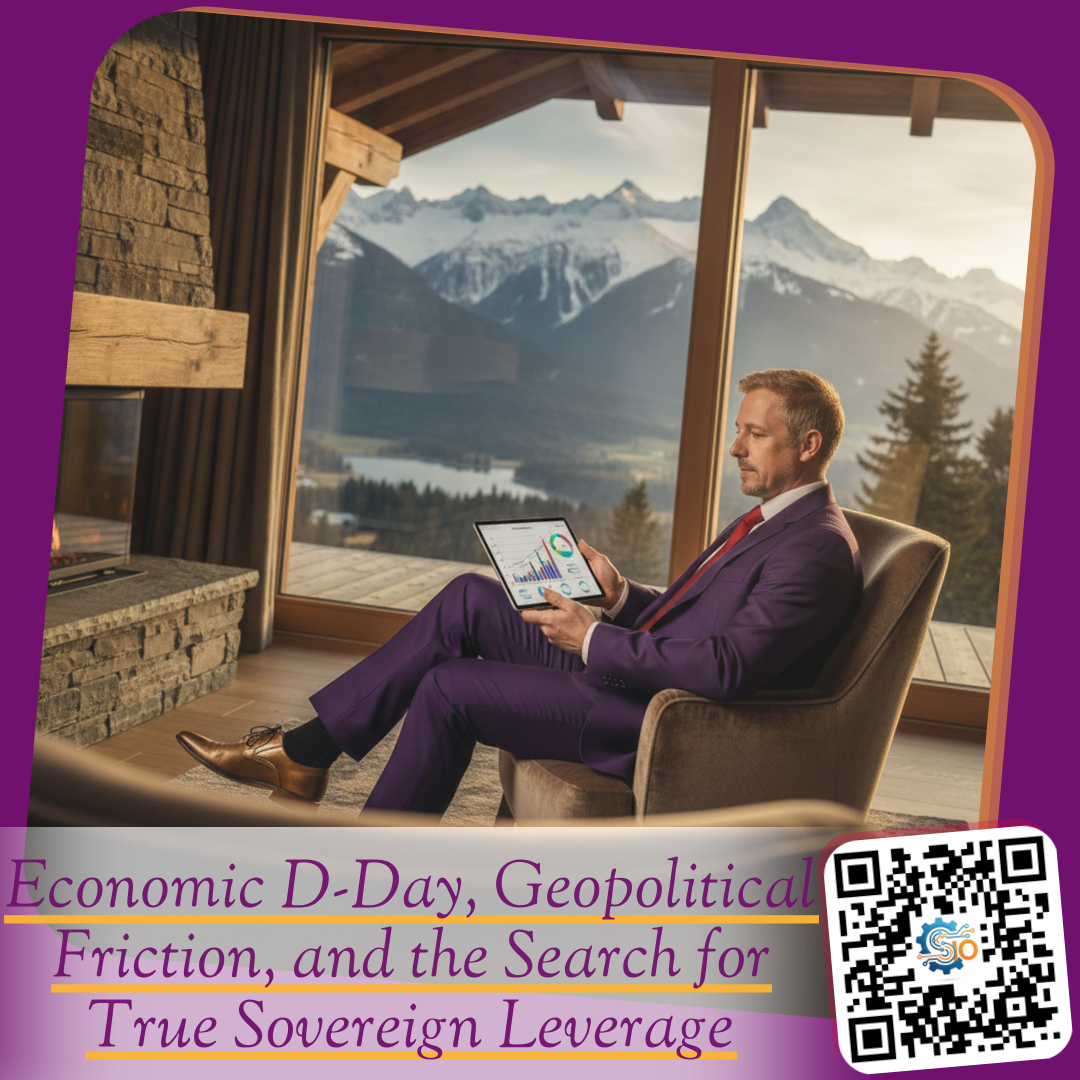
There is nothing quite like watching the morning fog roll off the Alpine peaks while sipping a double espresso in my favourite purple suit. From where I sit here in my Swiss chalet, the world outside seems pristine and undisturbed. Yet, a quick glance at the global wire this late August morning paints an entirely different picture. The headlines are dominated by talk of an economic D-Day directed at Iran, with unprecedented sanctions designed to choke off fiscal lifelines, freeze capital, and force geopolitical concessions.
Whenever high-stakes political maneuvers make the headlines, the ripple effects never stay confined to one region. From volatile energy benchmarks to disrupted shipping corridors, central powers continue to use traditional financial chokeholds to dictate global commerce. If you are building a life of financial freedom, watching these heavyweight conflicts unfold should serve as a stark reminder. When nation-states clash, fragile legacy systems shudder, leaving ordinary entrepreneurs to bear the brunt of the instability.
The Anatomy of an Economic Chokehold
The phrase economic D-Day carries heavy historical weight. It implies an overwhelming, coordinated offensive aimed at dismantling a regime through fiscal isolation. When major powers tighten export controls, freeze foreign reserves, and penalize international banking partners, the immediate consequence is acute domestic strain. Inflation skyrockets, supply chains seize up, and the local currency plummets.
However, modern economic warfare rarely plays out like a classic battlefield victory. In an interconnected world, squeezing one major player sends shockwaves through global markets. Energy traders react to every hint of retaliation, maritime insurers raise risk premiums across the Persian Gulf, and international logistics networks face costly detours. We have already explored why these conventional pressure points are evolving in our previous analysis, Why the Strait of Hormuz Is a Legacy Metric: The Real Battle for Autonomy.
Centralized economic sanctions rely on the assumption that global trade flows through a handful of guarded bottlenecks. When those bottlenecks are squeezed, alternative settlement channels inevitably emerge. Shadow fleets, bilateral currency swaps, and decentralized commerce spring up to bypass the gatekeepers. Geopolitical pressure does not eliminate economic activity; it simply forces it underground or accelerates the development of parallel networks.
Global Friction and the Sovereign Individual
What does this geopolitical standoff mean for you and me? On a personal level, it reinforces an essential truth: relying on a single geographic location, currency, or centralized banking pipeline is a dangerous vulnerability. While governments engage in massive economic standoffs, individual operators must focus on personal resilience and absolute clarity.
As we discussed recently in Navigating Global Currents: From Maritime Turbulence to Sovereign Focus, the secret to thriving during macro-level turmoil is insulating your daily operations from political shocks. If your livelihood depends entirely on local infrastructure, you are inherently exposed to regulatory whims, inflation spikes, and sudden supply interruptions. True sovereignty requires creating automated, borderless digital systems that generate value regardless of geopolitical crosswinds.
Consider the broader context of our current economic era. With global balance sheets stretched to the breaking point, every geopolitical skirmish adds pressure to an already fragile debt framework. We examined this systemic vulnerability in The Forty Trillion Dollar Debt Fracture and the Rise of the Bio-Standard Economy. When central authorities wield sanctions aggressively, they often accelerate the very de-dollarization and structural fragmentation they seek to control.
Building Lean Systems That Transcend Borders
Whenever I lace up my golden shoes and sit down at my desk to review operational models, my goal is always simplicity, scalability, and independence. If you run a business today, your digital infrastructure should be bulletproof. It should not matter whether international energy routes are blocked or whether central banks adjust trade policies overnight.
This is where smart, unified software becomes your greatest strategic asset. Instead of stitching together dozens of fragile third-party tools that can break whenever a service provider updates its regional compliance policy, smart digital creators centralize their enterprise. By running your marketing funnels, customer communications, and product delivery through Systeme.io, you eliminate operational bloat and secure a lean, automated business engine that operates seamlessly across global borders.
Having that level of automation is not just about saving a few hours each week. It is about emotional and financial calm. When geopolitical headlines scream about imminent crises and market crashes, a fully automated online business continues to serve customers, process transactions, and generate cash flow without requiring your frantic manual intervention. Automation transforms external chaos into predictable internal growth.
Strategic Takeaways for Late Summer 2026
As we navigate the closing weeks of summer, smart operators should take practical steps to fortify their position. Geopolitical posturing will continue to produce dramatic news cycles, but your focus must remain on execution and protection. Here are the core principles to keep in mind:
- Diversify your exposure: Avoid concentrating all your assets or business revenue in a single domestic market or banking jurisdiction.
- Embrace digital agility: Build businesses based on intellectual property, automated services, and global digital distribution.
- Automate core operations: Leverage unified tools so your customer acquisition and revenue generation run smoothly around the clock.
- Filter out headline hysteria: Separate actionable economic intelligence from sensational political theatre.
The aggressive use of economic statecraft across the Middle East is another chapter in a long history of institutional conflict. The institutions will continue to battle for control of trade routes, currency dominance, and regional supremacy. Your objective is not to win their battles, but to build an unshakeable foundation that allows you and your loved ones to live with total freedom, elegance, and peace of mind.
Closing Reflections
How well is your current business model insulated against sudden international economic shocks? What steps can you take today to build greater digital autonomy into your daily workflow?
I wish you clarity, disciplined focus, and great success in all your strategic ventures. Let me know your thoughts and insights over on my social channels, where we continue the conversation on sovereign growth and lifestyle design!