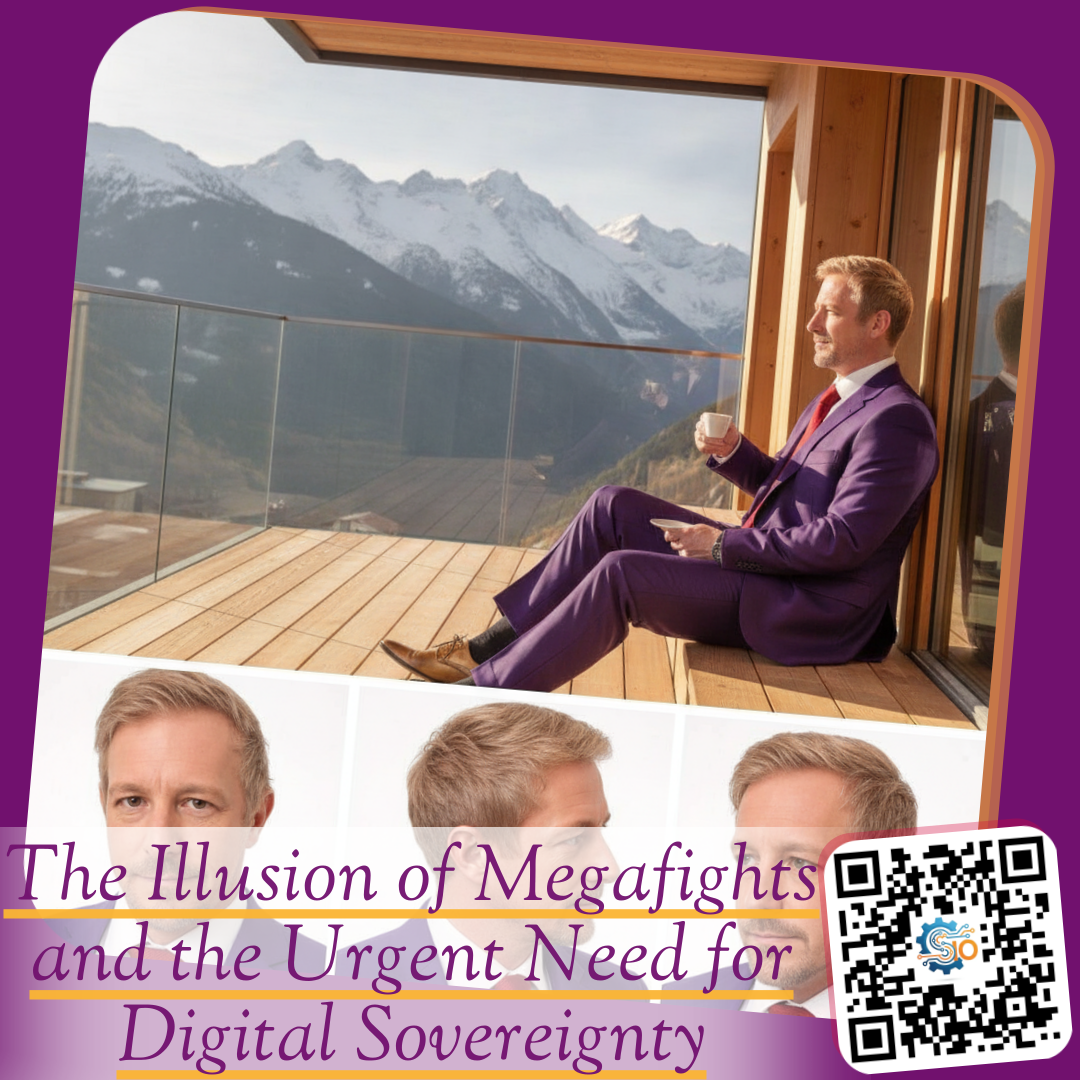
The afternoon sun is cutting clean through the autumn chill here in the Swiss Alps. From where I sit on my chalet terrace, espresso steaming in a porcelain cup and the golden light catching the polish of my golden shoes, the peaks look utterly unbothered by human drama. Down in the valley, life moves with quiet, predictable grace. But open any screen today, and you are hit by a wall of high-stakes noise and institutional unraveling.
Dana White just cast serious doubt over the long-awaited Tyson Fury and Anthony Joshua showdown after twenty-four hours of absolute promotional chaos. Millions of fight fans spent the weekend refreshing their feeds, watching contractual ultimatums, frantic backroom negotiations, and conflicting statements fly across social networks. What was billed as the defining British heavyweight collision of a generation suddenly looks like another mirage constructed out of promoter ego and volatile commercial politics.
It makes you smile, but it also makes you think. We live in an era where the grandest promises made by legacy gatekeepers dissolve the moment pressure is applied. Whether it is heavyweight boxing, national infrastructure, or the databases holding our most private information, the institutions demanding our attention and trust seem increasingly incapable of keeping their word.
The Fragility of Grand Spectacles
We have watched this movie before. Not long ago, I wrote about this exact theater in The Cardiff Colosseum: Why Fury vs Joshua Demands We Reclaim Our Own Arena. The fundamental lesson has not changed. When you invest your emotional energy into monolithic entertainment machines, you leave yourself at the mercy of backroom arguments and fragile commercial egos. The spectacle is endlessly monetized, but the delivery is constantly in doubt.
The collapse of certainty in sports is annoying, but it mirrors something far more dangerous happening across our daily lives. Look at the headlines running alongside the boxing gossip this Sunday. Ten National Health Service staff members were just summarily dismissed after accessing confidential medical files in a catastrophic data breach. In the United States, an audacious cyber intrusion compromised the laboratory blood and urine test records of federal special agents.
Think about the intimacy of that compromise for a moment. People who put their lives on the line for national security had their internal biological markers exfiltrated into hostile server farms. Patients seeking clinical care discover their records passed around like casual office gossip. The very entities entrusted with guarding human health and sovereign authority cannot even secure their own digital filing cabinets.
When Legacy Infrastructure Springs a Leak
Everywhere you look, the central pipes are bursting. In the United Kingdom, thousands of residents woke up this weekend without running water while major roads shut down because of ancient municipal pipes giving way. Across the continent, critical Starlink ground stations in Poland face suspected sabotage, while Ukrainian data infrastructure endures targeted assaults. Even the high-altitude Himalayan base camps are being swept by deadly avalanches as unpredictable autumn weather patterns set in.
We explored the deeper mechanics of these systemic failures recently in The Vulnerable Cloud: Sabotaged Servers, Stolen Vitals, and the Battle for Digital Sovereignty. The central illusion of modern life is that large institutions possess the competence to protect what belongs to you. We are told to hand over our identity, our financial data, our health markers, and our daily communications to centralized silos, under the promise that their scale creates security. In reality, scale often creates nothing more than an irresistible target and a layer of bureaucratic negligence.
Consider the geopolitical theater unfolding in Washington this week. World leaders rolled out red carpets and military flyovers, exchanging ornate gifts like bald eagle statues while locked in an existential contest over artificial intelligence supremacy. The rhetoric is grandiose, painted with sweeping promises of industrial modernization and peace pacts. Yet, behind the photo opportunities, municipal websites are being hijacked by autonomous bot swarms, and basic community services are buckling under the weight of outdated operational tools.
Building Your Own Sovereign Stronghold
When you see the chaos unfolding in boxing boardrooms and government ministries, what is the rational response? You do not panic, and you certainly do not sit around waiting for a committee to fix your reality. You construct your own arena.
True freedom, the kind that lets you sip vintage wine in a purple suit while the world argues over contract clauses, comes down to ownership. If your livelihood depends on someone else’s platform, you are merely a tenant awaiting an eviction notice. If your customer data is scattered across five insecure legacy services, you are one rogue password away from catastrophe. Digital sovereignty is not an abstract political concept; it is the practical discipline of running your life and enterprise on systems you actually control.
This is why I preach the gospel of self-reliance to every entrepreneur who reaches out to me. Instead of relying on a tangled spiderweb of disjointed plugins and brittle external databases that leak customer confidence, smart operators simplify. They bring their entire architecture under one secure roof. That is where an all-in-one platform like Systeme.io proves so vital. When you manage your audience, your sales funnels, your newsletters, and your digital assets through Systeme.io, you eliminate the fragile dependencies that leave traditional businesses scrambling when third-party servers fail.
You cannot stop a promoter from canceling a fifty-million-pound fight twenty minutes before the press conference. You cannot personally patch the plumbing of an aging metropolis or rewrite the cyber defense protocols of a national healthcare system. But you can ensure that your own digital house is built on bedrock rather than sand.
The Power of Intentional Focus
Autumn has a way of clearing away summer illusions. The days grow shorter, the mountain air sharpens, and the fluff simply blows away. As the final quarter of the year approaches, ask yourself where you have been placing your trust. Have you been relying on grand spectacles and external institutions to deliver your security, your entertainment, and your forward momentum?
The headlines will always be saturated with chaos. One day it is a canceled heavyweight title match; the next day it is a global data leak or a flash flood submerging city roads. The people who thrive across the coming decade will not be the ones who consume the most commentary about these breakdowns. They will be the builders who recognize systemic fragility early and double down on personal autonomy, robust tools, and independent revenue streams.
Put your energy into things that answer to you. Guard your personal data as if it were pure gold. Treat your digital audience as your greatest asset, and refuse to leave your core operational infrastructure in the hands of careless gatekeepers.
As the shadows stretch across these snowfields and the fire starts crackling in my hearth, I leave you with a couple of questions to ponder as you plan your week ahead.
Where in your personal or professional life are you depending on a fragile third party that could collapse overnight? And what simple, decisive step can you take today to reclaim direct ownership of your digital assets and your peace of mind?
I wish you clarity, quiet confidence, and unmatched focus as we head into the new week. Let us keep the conversation going over on my social networks, and remember to build what cannot be taken away with the stroke of a promoter’s pen.