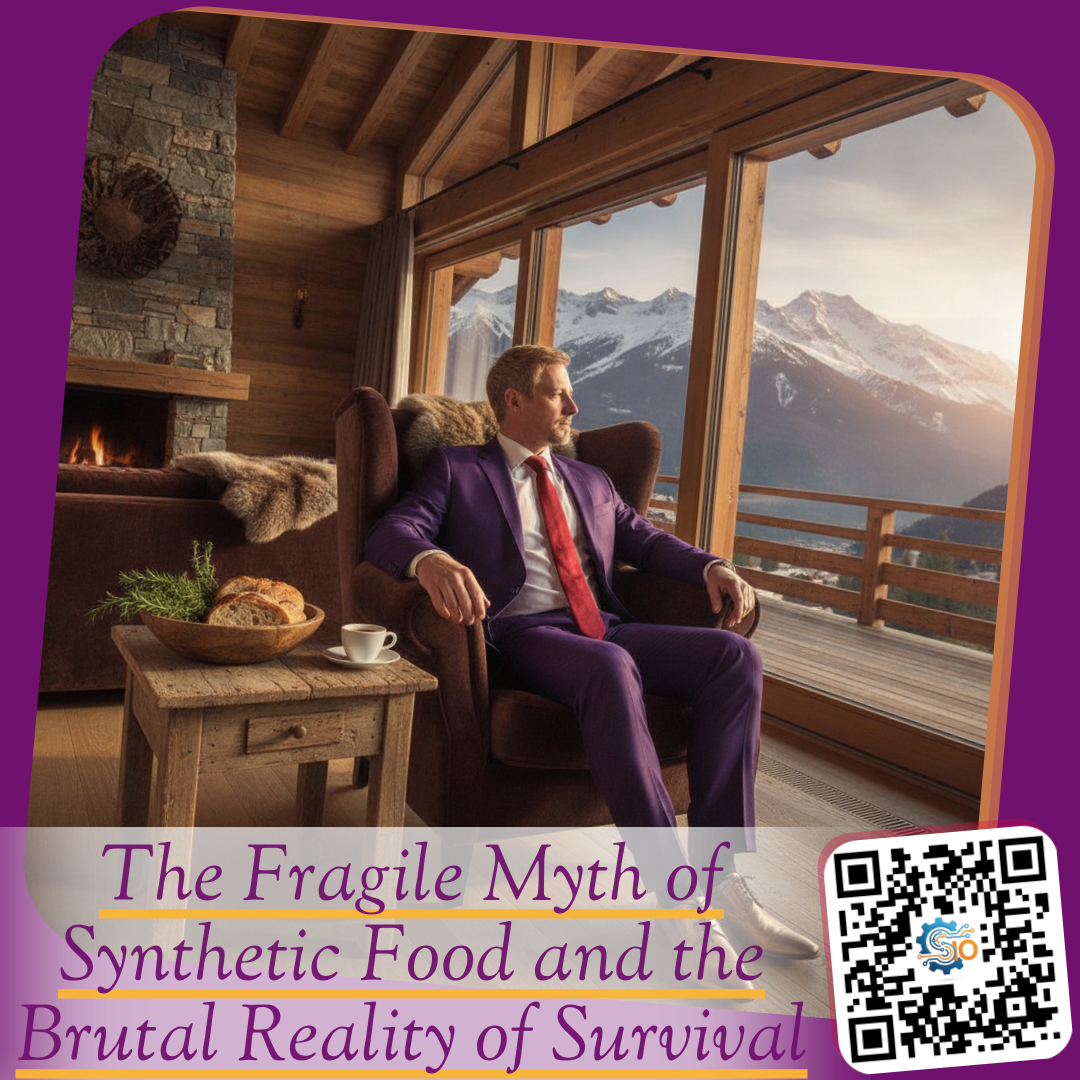
Good morning from the Swiss Alps, my friends. As the early autumn light hits the mountain peaks outside my chalet windows, I find myself sitting here in my favorite purple suit, enjoying a fresh cup of dark roast, and reflecting on how bizarrely divided our modern world has truly become. We live in an era of staggering contrasts where comfortable societies invent artificial problems to solve, while elsewhere on the same continent, basic human endurance is tested down to the bone.
Just yesterday, I was reading about the British advertising standards authority cracking down on a Huel marketing campaign. The regulators stepped in with surgical precision because the brand implied that its nutrient-dense powders and ready-to-drink shakes could completely replace conventional meals. In our affluent urban bubbles, we obsess over whether a powdered shake can legally claim to replace lunch, debating the fine nuances of synthetic nutrition and metabolic optimization.
Yet at the very same moment, across the eastern edge of Europe, civilians living under siege in Russian-occupied cities are waking up to dry taps and empty pantries. For these men, women, and children, breakfast is not a scientifically engineered powder mixed with oat milk. It is whatever edible wild plants and bitter garden weeds they can harvest between artillery rounds.
The Policed Fantasy of Total Convenience
There is something almost comical about the regulatory drama surrounding meal shakes. The authorities were deeply concerned that consumers might believe whole foods are obsolete and abandon fresh produce entirely for convenience drinks. We dedicate endless committee hours, legal filings, and bureaucratic energy to policing how synthetic sustenance is described to shoppers who already enjoy unlimited grocery store aisles.
This relentless pursuit of frictionless living is something I touched on in The Gas Station Heroin Growth Trap and the Timeless Genius of the Peanut Butter Sandwich. We are constantly searching for modern shortcuts that eliminate effort, only to find ourselves trapped in synthetic simulations of actual living. We engineer high-tech powders to save ten minutes of cooking, and then we create watchdog agencies to protect us from believing our own commercial fantasies.
This is the luxury of profound safety. In a society insulated from famine, we can afford to treat food as a speculative lifestyle upgrade. We transform eating into an intellectual exercise, an optimization metric, or a branding battleground.
When Modern Infrastructure Collapses Into Weeds
Now turn your gaze several hundred miles east to the scorched towns under military occupation. In places where running water, electricity, and delivery trucks have vanished, the veneer of twenty-first-century life disappears overnight. People are not agonizing over whether their daily beverage contains twenty-six essential vitamins. They are kneeling in the dirt, digging up dandelions and sorrel to keep their children from starving.
This is what real disruption looks like. It is not an exciting technological paradigm shift or a venture capital pitch deck. It is the sudden, terrifying return to the soil when the grid snaps. When municipal supply chains shatter, modern survival is not dictated by clever branding or laboratory formulas. It is governed by raw grit, communal solidarity, and the stubborn knowledge of what can be safely boiled in a pot over open firewood.
We saw this exact systemic fragility detailed when discussing The Infinite Lag: Why Roofless Houses and Peanut Butter Rule 2026. The complex global systems we rely upon to deliver our daily bread are remarkably delicate. When they function, they allow us to imagine that we have transcended biology. When they fail, humanity is immediately forced back into the primitive gear-work of the earth.
The Calibration of Values in an Unequal World
Consider the psychological gulf between these two realities. In one room, a team of compliance lawyers spends months debating whether a powdered beverage advertisement crosses an ethical line by suggesting it can substitute for a roasted chicken. In another room, a grandmother hides in a cold cellar, rationing a handful of gathered greens and a crust of stale bread.
This is not merely an ironic juxtaposition. It reveals how our global civilization calibrates its values. When security is abundant, trivia expands to fill the entire horizon. We create massive administrative machinery to police the language of convenience, while completely forgetting how thin the ice beneath our feet actually is.
This illusion of permanence was a central theme in The Fall of Sham Contracts: Why Real Value Destroys Paper Empires. Whether we are discussing financial instruments, commercial claims, or basic infrastructure, we tend to mistake elaborate paper promises for fundamental reality. But when geopolitical crises erupt, all the paper promises burn, leaving only genuine utility behind.
Building Sovereignty in an Unpredictable Era
So what does a grounded person do with this realization while sipping an espresso in the quiet comfort of the Alps? You do not wallow in guilt, but you do cultivate genuine gratitude and practical sovereignty. You look at the comfortable synthetic illusions around you and decide to anchor your life in things that cannot be wiped out by an algorithm or an administrative decree.
For me, that means prioritizing real food security, investing in tangible assets, and running digital operations that offer maximum autonomy. When I manage my marketing funnels, automated workflows, and online assets, I rely on reliable infrastructure like Systeme.io because true peace of mind comes from simple, robust tools that work without needless complexity. You build independent revenue streams so that you never find yourself entirely at the mercy of brittle, over-engineered institutional structures.
Whether you are designing a business or planning your household logistics, simplicity and self-reliance always outperform fragile perfection. A garden patch and practical skills will always possess a resilience that laboratory powder cannot replicate.
Honoring the Ground Beneath Our Feet
The next time you walk into a well-stocked supermarket, take a moment to look at the colorful packages lining the shelves. Notice the elaborate promises, the clean logos, and the endless varieties of processed foods competing for your attention. Appreciate the wonder of it, but never forget that it rests upon a fragile web of international stability, diesel fuel, and peaceful cooperation.
While urbanites debate whether liquid meal shakes represent the future of human dining, ordinary people in war zones remind us of who we actually are. Strip away the power grid and the supermarket logistics, and humanity returns instantly to the ancient relationship between hands and soil.
Cherish real meals cooked with genuine ingredients. Support those who defend freedom against tyranny. And above all, keep your sense of proportion intact in a culture that frequently confuses advertising guidelines with the fundamentals of human existence.
How often do you reflect on the sheer fragility of the daily conveniences we take for granted? What practical steps are you taking to build true personal independence instead of leaning on fragile modern systems?
I wish you all deep health, clear thinking, and abundant peace. Connect with me over on my social networks to share your thoughts, and let us continue this conversation together.