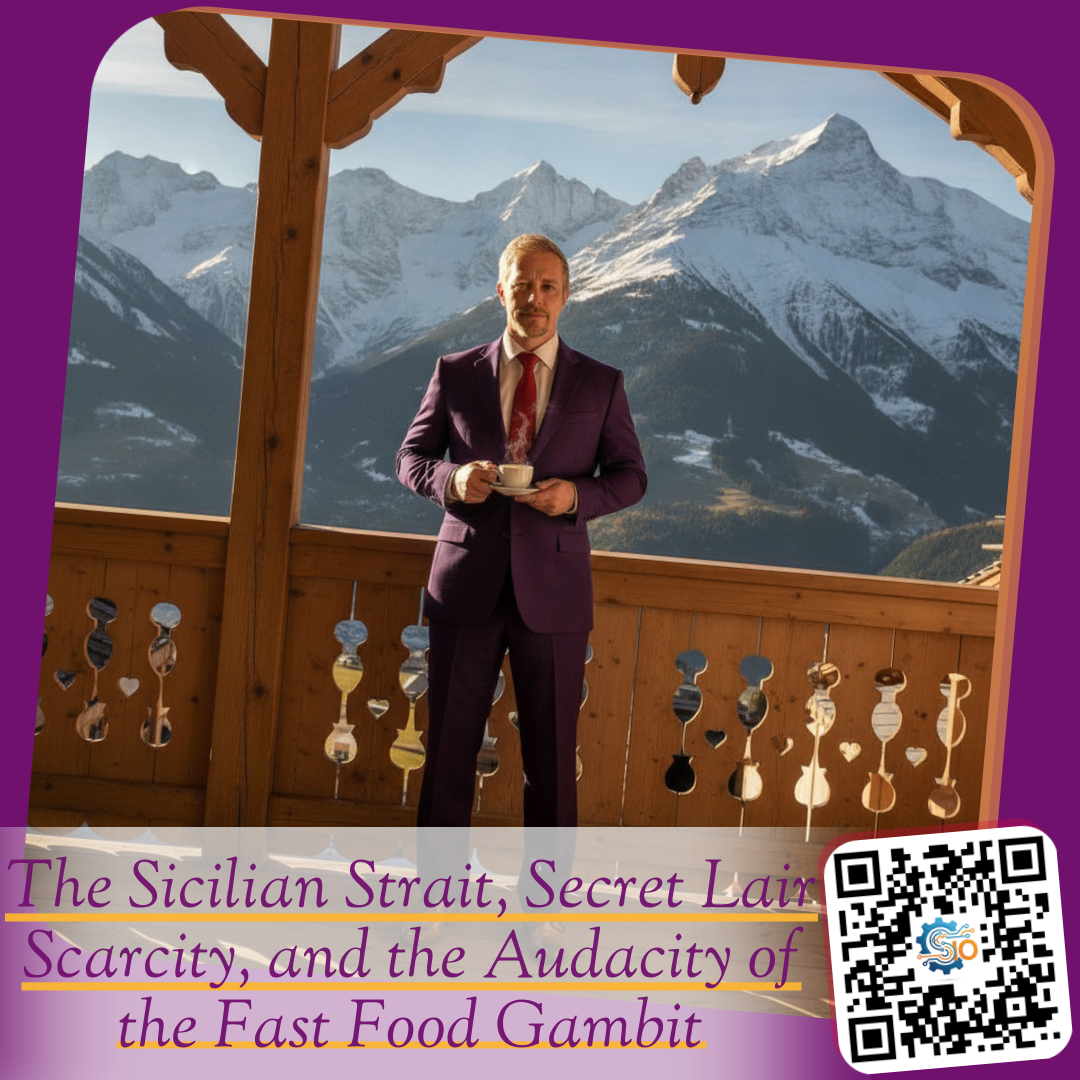
The morning light across the Swiss peaks has a crisp, sharp bite to it this October. Sitting here in my chalet with a fresh roast espresso, watching the sun hit the snowcaps while the logs crackle in the hearth, I find myself thinking about the games people play. I am wearing my favorite velvet purple suit, silk red tie, and freshly shined golden shoes, ready to tackle another day of business, but the headlines on my screen demand attention. The business press and foreign policy desks are hyperventilating over the maritime maps again.
Every analyst scrolling through Oilprice.com seems fixated on the same narrow strip of blue water. The Strait of Hormuz dominates every risk premium calculation, every insurance rate hike, and every solemn boardroom briefing across the globe. Yet, if you look at the board with the calm eyes of an experienced strategist, you realize something profound. What looks like an unpredictable crisis is often the most scripted play in the book.
The Strait of Hormuz and the Sicilian Defense
In chess, the Sicilian Defense is aggressive, sharp, and famously combative, but it is also one of the most exhaustively mapped openings in history. Grandmasters have analyzed every branch of the tree for centuries. When Black pushes that c-pawn, everyone at the table knows the terrain. There will be tactical skirmishes, blood will be spilled on the board, and tension will mount, but the parameters of the conflict are thoroughly understood.
The perennial dance around the Strait of Hormuz functions exactly like a grandmaster Sicilian Defense. Everyone understands the stakes: a twenty-mile chokepoint through which roughly a fifth of the world liquid petroleum passes. When tensions rise, tanker freight rates explode, energy desks execute predictable hedges, and naval patrols shift coordinates in a carefully choreographed waltz. It is dangerous, certainly, but it is fundamentally predictable. True strategic autonomy is not found in reacting to the moves that every analyst already charted three decades ago.
We saw this strategic myopia discussed recently in Championship Pressure, October Playbooks, and the Architecture of Modern Focus. When leaders fixate on headline noise, they forfeit the mental bandwidth required to orchestrate moves that competitors never anticipate. The real masters of commerce do not merely play defense in overcrowded channels; they invent entirely new boards.
The Sorcery of Artificial Scarcity and the Secret Lair Drop
While energy traders sweat over oil tankers, a far more sophisticated masterclass in economic leverage unfolds in the world of high-margin collectables. Consider the modern phenomenon of the Secret Lair drop. Wizards of the Coast transformed printed cardboard into liquid gold, not through brute logistics or physical chokepoints, but through the absolute mastery of manufactured FOMO and time-limited exclusivity.
A Secret Lair drop is pure psychological sorcery. The publisher announces a fleeting window, produces cards featuring niche artistic styles, and caps production so that latecomers are permanently locked out. The marginal cost of producing that cardboard is pennies, yet secondary markets treat these drops like sovereign debt bonds. They have solved the riddle of artificial scarcity in an era where digital abundance usually destroys pricing power.
In many ways, this dynamic mirrors the absurdity we unpacked in Why the Tactical Deadlock of a Eurocopter Tiger Deployment Fails Beside a Trader Joe’s Halloween Tote. Physical firepower and heavy industrial machinery consistently lose mindshare to simple, perfectly executed cultural tokens. The company engineering a forty-eight-hour card drop commands more real pricing power than an oil conglomerate negotiating pipeline rights against state cartels. One operates on brute force and geopolitical friction; the other operates on pure desire and voluntary surrender of capital.
The Audacious Gambit of the Recipe Change
If artificial scarcity is the ultimate move in demand creation, changing a heritage formula is the ultimate high-wire act of brand survival. Fast food giants operate in an arena of brutal customer expectations. When KFC announced a fundamental pivot in its chicken tenders and signature flavor profiles, industry observers held their breath. Messing with an iconic recipe is the corporate equivalent of sacrificing your queen in the opening moves.
Generations of consumers grew up on specific textures and proprietary blends of herbs and spices. To cast aside an established recipe in pursuit of modern consumer tastes requires nerves of cold steel. You risk alienating your most loyal devotees for the chance to capture younger palates who demand different crunches, cleaner oils, and novel seasoning architectures. If the gamble works, you revitalize a legacy franchise; if it fails, you face a humiliating retreat under public ridicule.
This is what separates bold enterprise from bureaucratic inertia. Anyone can manage a cash cow into slow irrelevance. It takes a genuine tactician to look at a multi-billion-dollar product line and say: the world has moved, and we must rewrite our foundational assets before the market writes us off. You are not waiting for an external crisis in a distant shipping channel to erode your margins. You are proactively shattering your own comfortable status quo to seize tomorrow.
Building Your Sovereign Infrastructure
What can you take away from these contrasting worlds of geopolitical theater, collector drops, and fast-food reinvention? The answer lies in how you design your own commercial machine. Whether you are selling advisory retainers, digital software, or exclusive lifestyle products, relying on legacy channels will eventually leave you stranded.
True financial independence demands that you own your distribution network. You cannot afford to build your empire on shifting sands or rely on contracts that evaporate when macro conditions shift. I explored this harsh reality in The Fall of Sham Contracts: Why Real Value Destroys Paper Empires, where we examined why direct relationships with your audience will always trump empty institutional promises.
To execute your own limited drops, roll out fresh service tiers, and keep your business immune to external market shocks, you need an integrated software foundation that handles the mundane operational friction without breaking a sweat. That is precisely why I point serious entrepreneurs toward Systeme.io. When you run your sales funnels, email marketing sequences, and membership programs through Systeme.io, you eliminate the technical headaches and retain total sovereign command over your customer journey. You become the grandmaster controlling the board rather than a pawn waiting for the next international crisis to dictate your fortunes.
The Grandmaster Perspective
The modern landscape rewards those who see through the surface narratives. Geopolitics will continue to provide spectacular drama in traditional trade corridors, but that is the old world operating on old software. The real wealth of this decade is being captured by leaders who master the psychology of artificial scarcity and possess the courage to reinvent their core offerings when everyone else clings to obsolete recipes.
From where I sit, watching the alpine twilight turn the snow fields to gold and lavender, the path ahead looks remarkably clear. Cultivate your audience, build products that ignite true excitement, automate your delivery pipes, and never be afraid to flip the board when the conventional game becomes a trap. When you control both your narrative and your infrastructure, no distant chokepoint can ever limit your ascent.
As you map out your upcoming business quarter, ask yourself: are you currently pouring your focus into predictable games that everyone else has already solved? What sacred recipe in your business are you ready to tear down and rebuild before the market forces your hand? Drop your thoughts on my social media feeds, and let us elevate our market strategy together. Here is wishing you razor-sharp clarity, bold decisions, and abundant freedom.