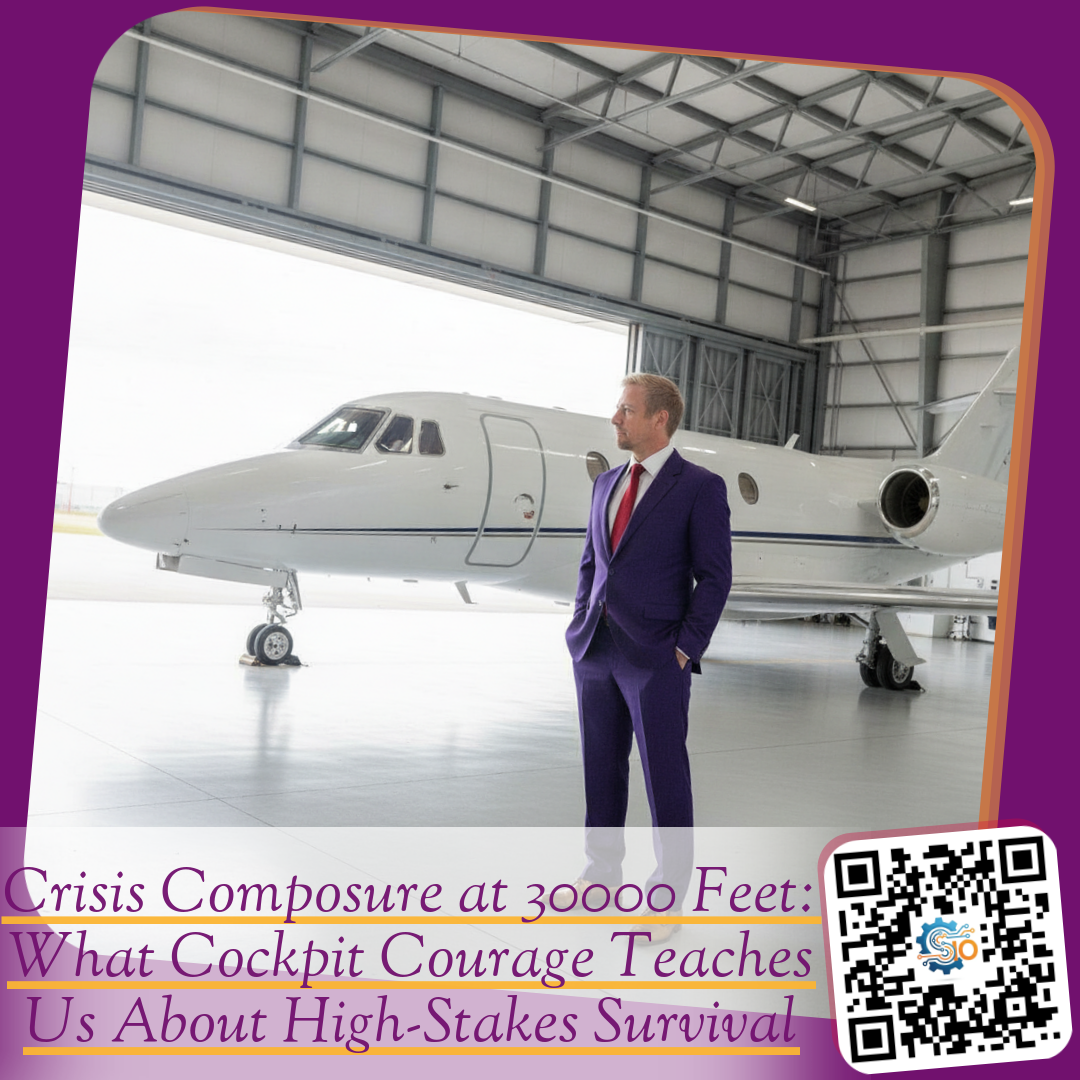
There are mornings when the stillness of the Swiss Alps feels almost surreal. From the floor-to-ceiling windows of my chalet, the early October frost catches the sunlight across the jagged peaks. Sitting here in my favorite purple suit, white shirt pressed, red tie knotted tight, and my golden shoes gleaming by the hearth, I like to think of myself as someone who orchestrates peace through careful design. But peace is never guaranteed; it is an active discipline.
Earlier today, as I checked the wire services over a fresh espresso, a chilling report stopped me in my tracks. A Flydubai flight en route to Israel plunged into terror at cruising altitude when a co-pilot launched a violent stabbing attack on the captain. The aircraft suddenly entered a terrifying nosedive as passengers screamed and clung to their children. Amid blood and absolute chaos, the wounded captain fought back with iron resolve, declaring later that he was simply not going to let everyone die. With the help of an observant passenger who leaped into the fray to lock the assailant in a chokehold, the flight crew regained control and brought everyone down safely.
Incidents like this strip away every layer of modern comfort and expose the raw bedrock of reality. Whether you are navigating an airliner through the troposphere or directing a multi-million-dollar digital enterprise, catastrophe does not announce its arrival with courtesy. It strikes abruptly, testing your reflexes, your architecture, and above all, your mental discipline.
The Anatomy of Grace Under Unimaginable Pressure
Think about the sheer psychological fortitude required to regain control of a falling aircraft while bleeding from a sudden assault. Most people assume that under extreme shock, human instinct defaults to panic. We freeze, we flail, or we submit to impending doom. Yet, true professionals cultivate a mental firewall that separates panic from practical execution.
I reflected on this dynamic recently in my essay, From Mortality to Mastery: What Alex Ferguson and Modern Crises Teach Us About Strategic Composure. When the stakes reach an absolute peak, emotional surrender is a death sentence. Strategic composure is not about the absence of fear. It is about channeling adrenaline straight into decisive, mechanical action. The captain on that flight did not have the luxury of existential despair; he had an altitude gauge spinning downward and seconds to avert disaster.
Every ambitious person must build that same internal ballast. We often encounter sudden shocks in life, whether a sudden health scare, an aggressive legal challenge, or a catastrophic operational breach. If your mind is undisciplined, the shock paralyses you. When your internal protocols are rehearsed, your body acts to save the vessel before your conscious mind even completes the thought.
When Single Points of Failure Turn Inward
Modern commercial aviation is arguably the safest transportation ecosystem ever engineered. Layers of digital redundancy, radar telemetry, and strict protocols protect passengers from mechanical failures and weather anomalies. Yet, this terrifying incident reveals the ultimate vulnerability: the insider threat, the internal malfunction of human intent.
In the world of technology and asset security, we call this the single point of failure. It is the silent flaw that undermines otherwise flawless machinery. I explored this vulnerability in Why Manual Oversight Is a Terminal Risk and Automation Is Your Only Survival Strategy. Whenever an organization relies purely on unchecked manual authority, it invites systemic ruin. When human emotions, radicalization, or erratic impulses gain unchecked control of critical levers, disaster follows swiftly.
That is why modern infrastructure demands rigorous checks, automated overrides, and decoupled systems. In my own online businesses, I refuse to let daily operational survival depend on fragile, unpredictable bottlenecks. When running complex digital sales funnels and global customer ecosystems, relying on fragmented tools or haphazard manual input is a recipe for an operational nosedive. That is why I rely on streamlined, rock-solid platforms like Systeme.io to keep the fundamental engines running smoothly without unnecessary manual friction. By centralizing automated workflows, email sequences, and digital transactions into a unified framework, you remove individual human points of failure and keep your enterprise flying level, no matter what surprises emerge in the cabin.
Wrestling Chaos to the Floor
Another striking detail from the incident was the passenger who acted without hesitation. Hearing the struggle and witnessing the sudden descent, he did not pull out a smartphone to record the descent or wait for someone else to step forward. He threw his arms around the attacker, applying a chokehold until the threat was subdued. That is raw, unhesitating intervention.
We see this principle play out across every high-stakes environment. In my piece, Tactical Mastery and the Unpredictable Open Sea: Surviving Modern Disruptions, I examined how sudden environmental shifts punish passive observers. Out in deep waters or thirty thousand feet in the air, salvation rarely comes from committees. It comes from the individual who recognizes that immediate physical or strategic resistance is the only path to survival.
In business and personal governance, crisis management requires that exact brand of courage. When an unexpected crisis strikes your organization, you cannot afford lengthy deliberations. You must isolate the disruption, choke off the source of chaos, and allow your core leadership to focus entirely on leveling the wings. Anything less ensures a collective crash.
Hardening Your Life Against the Unthinkable
It is easy to sit in comfort, admiring fine tailoring and tranquil alpine vistas, and convince oneself that catastrophe belongs only to other people. But the world is becoming more turbulent, not less. Geopolitical frictions are simmering, economic systems are vibrating under intense pressure, and unpredictable events are becoming standard operating procedure. High standards of aviation safety remind us that life is precious, fragile, and worth defending with every ounce of our willpower.
True sovereignty means engineering resilience into every dimension of your existence. It means strengthening your physical body so you can react with power when physical endurance is demanded. It means sharpening your mind so that shock never leads to freeze. And it means building financial freedom and automated operational structures that do not crumble when a storm hits.
When the unexpected strikes, nobody is coming to fix your trajectory for you. You must have the clarity to look at the instrument panel, shake off the pain, and pull back on the yoke.
Final Reflections
The bravery displayed aboard that flight should serve as a profound wake-up call for all of us about the value of quick action and unwavering responsibility.
How prepared are your current business and life systems to handle a sudden, severe internal disruption? And when chaos enters the room, do you default to hesitation, or are you trained to seize control of the yoke?
I wish you clarity, unwavering focus, and safe travels wherever your journey takes you this week. Let us continue the conversation across my social media channels, where we unpack strategic mastery and personal resilience every single day.