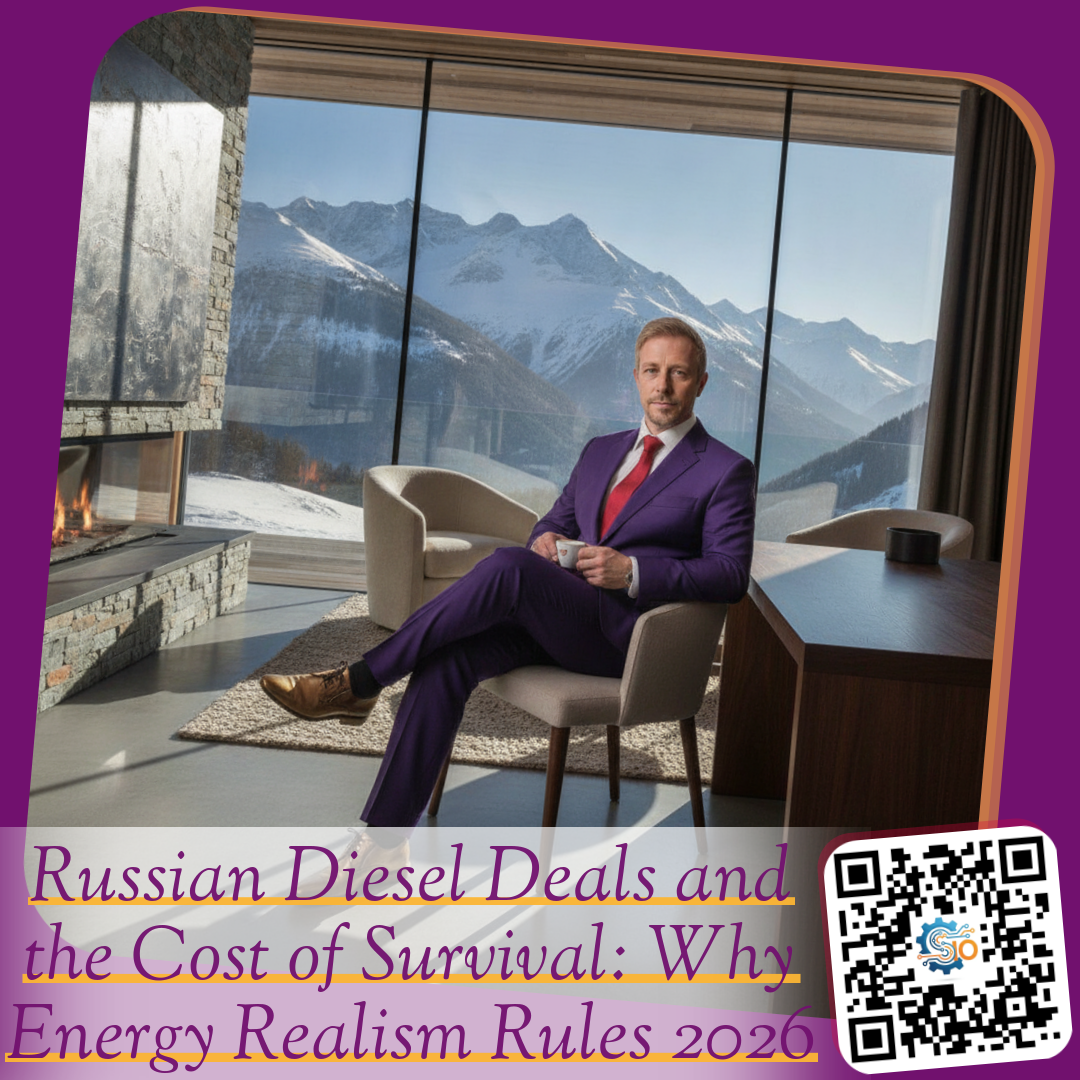
The morning light across the Swiss peaks has a way of cutting straight through the noise. Down below the timber terrace of my chalet, the pines are already dusting over with an early autumn frost. Inside, the fire crackles softly against the stone hearth, reflecting off my golden shoes while I pour my second roast coffee of the morning. Yet, as I open the international news feeds, the world down in the valleys is anything but calm.
Headlines across the Atlantic and Europe exploded hours ago. Donald Trump announced an emergency deal to secure Russian diesel supplies, framing it as an absolute necessity to prevent a domestic transport paralysis. Kyiv reacted instantly and fiercely, with Volodymyr Zelensky declaring the pact an unforgivable lifeline and gift to Vladimir Putin. Washington insiders openly admit the domestic panic over pump prices ahead of crucial political deadlines forced this sudden, seismic pivot.
If you have been watching the macro chessboard over recent months, this shockwave was almost inevitable. In my earlier breakdown, The October Shockwaves: From Panama Earthquakes to Global Chokepoints, we explored how physical friction rapidly shatters political posturing. The reality is simple: modern economies run on fuel, and moral indignation cannot heat homes or keep long-haul freight moving across continents.
The Raw Arithmetic of Fuel and Political Survival
Energy does not care about political ideology. When refining margins explode and distribution corridors get pinched, political leaders invariably choose immediate survival over ideological consistency. The global diesel market has been operating on razor-thin margins for over two years, and the squeeze finally reached a breaking point that no rhetoric could cover up.
For months, western leaders attempted to navigate a tightrope of strict embargoes while quietly ignoring third-party blending in maritime gray zones. That fragile equilibrium has snapped. By stepping forward to directly greenlight Russian diesel imports, the administration made a calculated bet: voters will punish sky-high fuel bills at the ballot box far more brutally than they will criticize diplomatic contradictions.
Predictably, the diplomatic fallout is intense. Eastern European allies feel blindsided, Ukrainian leadership calls it a profound betrayal, and critics are calling it an outright surrender to petro-state leverage. Yet within Washington, the calculus is brutal and clear. The modern supply chain halts without diesel, and when diesel stops, inflation compounds exponentially overnight.
Navigating the Realities of Global Energy Markets
The swiftness of this transaction exposes how deeply intertwined modern energy markets remain, regardless of public sanctions regimes. Whenever industrial capacity is threatened, backroom pragmatism always reasserts itself. We witnessed a similar dynamic when reviewing Navigating the October Tempest: Power Plays, Ruthless Focus, and Personal Sovereignty, where sovereign interests inevitably strip away decorative diplomacy in moments of acute stress.
Consider the immediate ripple effects across the globe today:
- European transport authorities are scrambling to reassess their own winter stockpiles, terrified of being left with high-cost imports while American competitors secure discounted barrels.
- Shipping lanes across the Mediterranean and Atlantic are recalibrating logistics, shifting vessel charters to handle sudden transatlantic movements.
- Financial traders are aggressively pricing in a new floor for refined distillates, acknowledging that global demand cannot be satisfied without Russian output.
When you strip away the partisan outrage, this sudden deal demonstrates a timeless truth: leverage belongs to those who control essential physical commodities. For all the talk of green transitions and rapid decoupling, the machinery of modern civilization still relies on heavy hydrocarbons. Denying that reality only accelerates systemic fragility.
From Geopolitics to Personal Architecture
Watching these high-level maneuvers unfold from my alpine desk reinforces a lesson I share with my inner circle constantly. When you depend on fragile, complex external systems for your daily operations, you are perpetually vulnerable to someone else’s emergency deal. Geopolitics is merely human self-interest magnified onto a continental scale.
Nations that neglected their domestic refining capacities now find themselves trading away long-held diplomatic stances just to keep diesel pumps flowing. In our own businesses and lives, the exact same principle applies. If your enterprise depends on a dozen disjointed, third-party software subscriptions that can change their terms or prices tomorrow, your operation rests on quicksand.
This is why true independence requires owning an integrated, robust operational hub. Instead of stitching together seven fragile platforms for email delivery, sales funnels, course hosting, and payments, building on an all-in-one platform like Systeme.io gives you complete control over your cash flow. Just as a nation must secure its fuel supply, a modern entrepreneur must secure their digital assets against platform risk and unpredictable overhead.
The Illusions of Modern Stability
We live in a culture that loves comfortable narratives right up until the price of basic necessities doubles. In The Liquidation of Comfort Equity: From Frozen Pizza to Algorithmic Empires, we examined how quickly ordinary citizens realize that abstract comfort can vanish under sudden economic strain. Today’s diesel deal is another stark reminder of that very liquidation.
The average consumer assumes the lights will always turn on, the grocery shelves will always be full, and delivery vans will always arrive on schedule. But that entire rhythm depends on an unbroken river of petroleum moving across hostile borders. When that river slows, even the most powerful governments will swallow their pride and execute backroom deals with sworn adversaries.
Recognizing this dynamic is not cynicism; it is strategic realism. Those who achieve true personal sovereignty do not waste emotional energy lamenting the moral contradictions of global leaders. Instead, they study these moves, identify systemic vulnerabilities, and structure their personal capital and operations so that external shocks never derail their personal freedom.
Building True Economic Sovereignty
As winter approaches the Northern Hemisphere, this diesel controversy will only intensify. European capitals will debate retaliatory tariffs, international bodies will issue fiery statements, and political commentators will shout across cable news networks. None of that noise will lower the baseline cost of running a business or heating an estate.
If you want to thrive in this era of sudden diplomatic flips and raw commodity fights, focus on what you can directly construct. Cultivate high-margin skills that do not depend on geographic borders. Build automated sales engines that produce cash flow regardless of macro inflation. Diversify your assets into tangible wealth that cannot be inflated away or locked behind sudden international sanctions.
True peace of mind does not come from hoping politicians make the right choices. It comes from knowing that your own household, your own balance sheet, and your own automated systems are built to withstand whatever tempest blows across the horizon.
Final Thoughts From the Alps
As the sun climbs higher over the ridge, the light gleams off the peaks and the mountain air feels crisp and completely clear. The global chessboard will continue its turbulent match today, with deals signed in secret and justified in public under the pressure of survival.
Are your current business operations truly resilient against sudden supply shocks and institutional reversals? Or are you relying on brittle assumptions that could unravel the moment economic pressure forces a compromise?
I wish you clarity, strength, and unwavering focus as you navigate the turbulent weeks ahead. Let me know your thoughts over on my social networks, and remember to keep your personal foundations unshakeable.