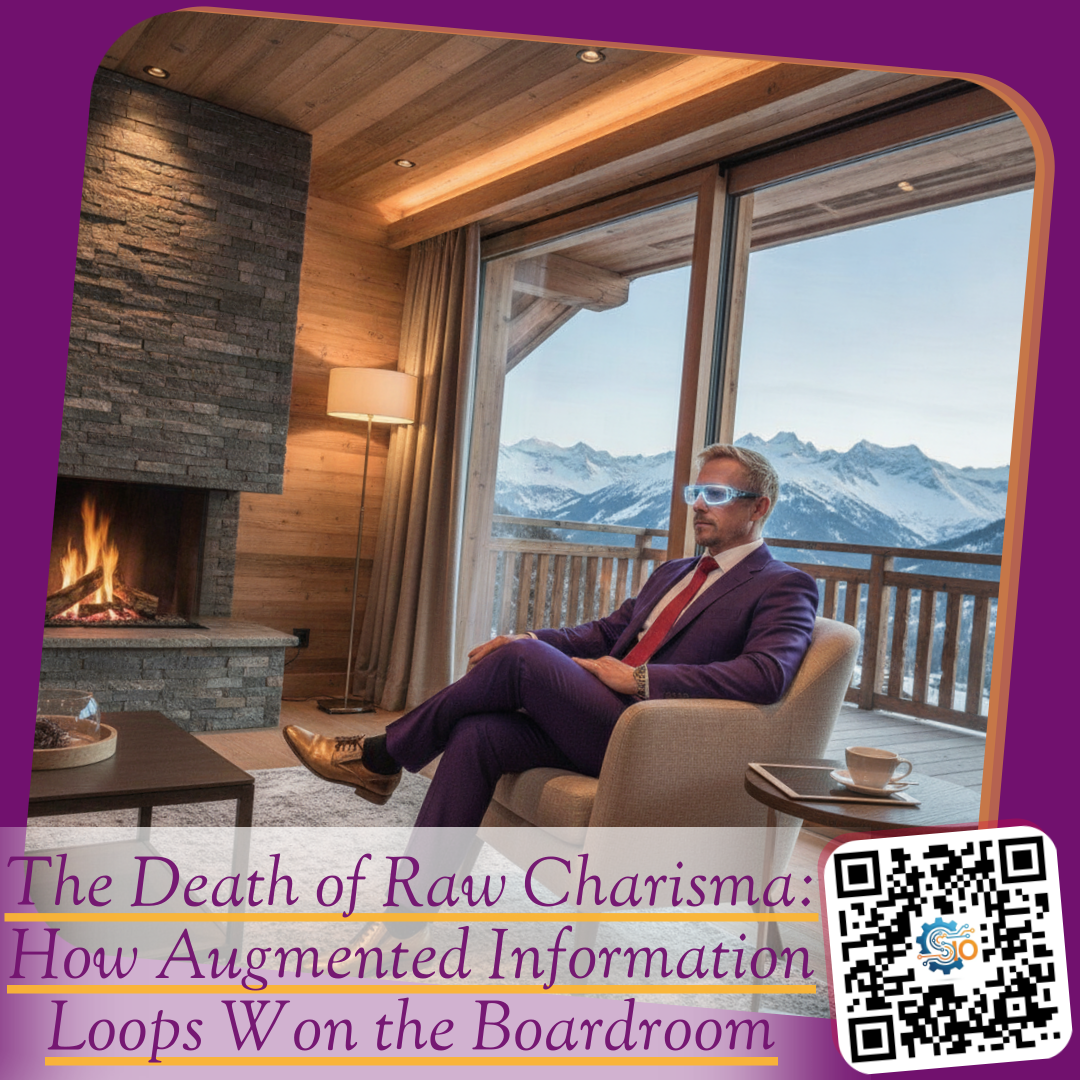
There is a special kind of silence that settles over the Swiss Alps just as dawn breaks in mid October. Looking out from my chalet terrace this morning, wrapping a silk scarf over my purple suit jacket and lacing up my golden shoes, the peaks in the distance felt completely motionless. Down in the valley, the world moves fast, but up here, you can see the patterns that govern how power really shifts. For centuries, human influence was defined by lung capacity, booming vocal cords, and pure physical projection. Today, that entire theater is collapsing under the weight of quiet, high-tech computation.
Consider two seemingly disconnected images from recent headlines. In the vibrant transport hubs of Accra, Ghana, the booming voices of bus evangelists who once dominated every commute inside crowded tro-tros are finally fading into quiet history. Transit authorities and passengers alike have grown weary of unfiltered vocal volume, preferring the quiet sanctuary of personal noise-canceling headphones. Meanwhile, thousands of miles away in the Welsh Parliament, an elected politician delivers an immaculate address, not by memorizing a speech, but by glancing through augmented-reality smart glasses that feed dynamic scripts directly onto his retina in real time.
The contrast could not be clearer. The era of raw charisma, the sweaty, lung-straining performance designed to browbeat a crowd into submission, is finished. In 2026, the elite closer does not shout. The elite closer operates on an invisible feedback loop.
The Collapse of the Loudroom
For generations, the playbook of persuasion belonged to the theatrical orator. Whether it was the street-level preacher fighting against the roar of a diesel bus engine in West Africa or the Wall Street raider hammering a conference table, volume was mistaken for authority. We were conditioned to believe that whoever controlled the acoustic space controlled the room. But loud performance has a fundamental flaw: it exposes its own machinery, wears people out, and creates friction.
Today, people actively resist sensory imposition. We live in an era where everyone carries an impenetrable digital bubble. Trying to force a viewpoint on someone through brute force projection does not convert them; it repels them. When you watch the historical shift unfolding on Ghana transit routes, you realize that public tolerance for uninvited decibels has permanently evaporated. People no longer want to be performed at. They want seamless, contextual resonance.
When you strip away the need to project physically, influence becomes surgical. It changes from an art of emotional exhaustion into a science of informational precision. The modern high-value environment requires zero wasted breath.
The Invisible Teleprompter and the Senedd Effect
What happened in the Welsh Parliament was not an isolated gimmick; it was a watershed moment for high-stakes rhetoric. By wearing lightweight optical frames that feed dynamic notes, counterarguments, and cadence cues straight into the visual field, an orator bypasses human cognitive latency. There are no dropped points, no clumsy pauses to flip through dog-eared paper, and no visible teleprompter screens signaling to the audience that a trick is underway.
To an external observer, the speaker simply looks composed, perceptive, and miraculously well-informed. The performance feels natural because the technology has been reduced to an ambient layer. This is the exact principle I explored when examining The 2026 Liquidation of High-Maintenance Friction. When you eliminate mechanical friction from your delivery, you free up one hundred percent of your cognitive bandwidth to read micro-expressions, monitor room temperature, and control your breathing.
The audience believes they are witnessing sheer intellectual brilliance. In reality, they are interacting with an augmented operator navigating a discreet information stream. Persuasion is no longer an athletic contest of memory; it is an interface advantage.
Asymmetric Intelligence in High-Stakes Rooms
Once you recognize that silent intelligence loops have replaced loud theatrics, the recent explosion in corporate surveillance suddenly makes chilling sense. In boardroom corridors and closed-door negotiations, the game is no longer won by charismatic grandstanding, but by asymmetric information dominance. When a foreign operative was recently charged with planting sophisticated listening equipment inside an OpenAI office, or during the sensational spy trial involving the German steakhouse heiress Christina Block, the lesson was the same: the true battle happens beneath the sensory threshold.
We touched on this growing vulnerability in our analysis of The Physical Espionage Era and the Fragility of Modern Infrastructure. The modern executive suite is under constant pressure from quiet collection tactics. Furthermore, as discussed in The Assistive Espionage Paradox: When Biology Becomes Corporate Contraband, the boundary between innocent assistive hardware and aggressive corporate espionage has dissolved entirely. A pair of stylish glasses can be a medical aid, an augmented teleprompter, or an audio-visual collection terminal.
When you step into a high-stakes negotiation today, you must assume the other side possesses immediate, silent feeds analyzing your concessions, your company balance sheet, and your historical speech habits. Trying to counter that depth of analytical firepower with a polished smile and firm handshake is like bringing a bronze sword to a drone fight.
Building Your Own Invisible Engine
So how does an ambitious entrepreneur or modern operator thrive in this quiet revolution? You stop relying on personal charisma as your sole asset. You build systems that do the intellectual and tactical heavy lifting long before you ever walk into a room.
In my own businesses, whether structuring private equity partnerships or coordinating international campaigns, I never rely on adrenaline. I rely on integrated, automated architecture. That is why platforms like Systeme.io have become indispensable for operators who understand modern leverage. Instead of burning your personal energy pitching individual prospects all day, you establish an automated backend where sales funnels, customer segmentation, and automated correspondence run continuously behind the curtain. When your business infrastructure operates like a finely tuned machine, you enter every high-value negotiation with total posture, because your revenue does not depend on theatrics.
True luxury, after all, is not having to shout to be heard. It is having systems so robust that your presence alone signals absolute control. When you remove desperate effort from the equation, your quietest statements carry immense gravity.
The Evolution from Charisma to Computational Poise
Let us look at the roadmap ahead. Within a few short seasons, optical smart glasses will look entirely indistinguishable from designer spectacles. Bone-conduction earpieces will sit deeply inside ear canals, offering real-time AI fact-checking during executive interviews, board reviews, and legal cross-examinations. The person who tries to memorize facts will be hopelessly outmatched by the operator who can navigate silent feeds without blinking.
We are watching the end of rhetorical swagger and the dawn of computational poise. In this new world, the quietest person in the room is often the most dangerous, because they are backed by an invisible army of algorithmic inputs whispering optimal strategy directly into their senses. Those who mourn the passing of old-fashioned, sweat-drenched oratorical charisma will find themselves left behind in drafty lecture halls, talking to empty benches while the real decisions are brokered in whispered, augmented silence.
Do you still rely on force of personality to close your most critical deals, or have you begun building invisible systems that give you computational leverage before you speak? When everyone around you gains access to live augmented prompts, how will you distinguish between genuine human insight and an expertly calculated script?
Enjoy your week, protect your cognitive boundaries, and stay exceptionally sharp out there. Connect with me across my social networks to share your perspective on where this silent technology wave is taking us next.