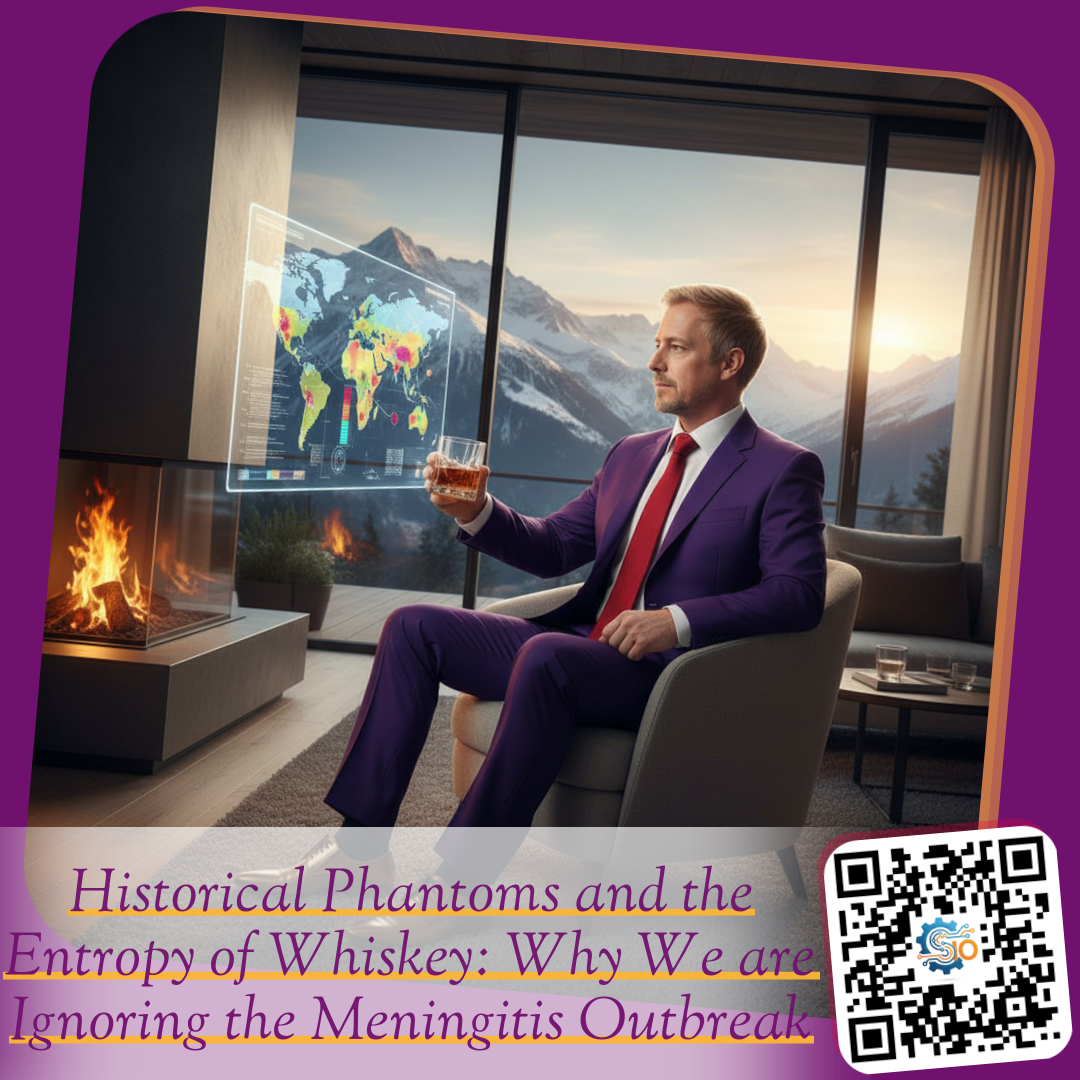
Greetings from the heights of the Swiss Alps. It is Thursday 19 March 2026, and as I sit here in my chalet, the sun is just beginning to kiss the snow-covered peaks of the Valais. I am wearing my favorite purple suit today, paired with a crisp white shirt and a red tie that matches the morning sky. My golden shoes are reflecting the light from the fireplace, and for a moment, everything feels perfectly still. But as I scan the headlines on my tablet, I can see that the rest of the world is anything but calm. We are currently caught in a strange loop of historical obsession while a very real, very biological threat is knocking at the door.
I was sipping a glass of bourbon late last night, thinking about the concept of legacy. Specifically, I was thinking about the Uncle Nearest whiskey brand. If you have been following the news lately, you know that the litigation and the public discourse surrounding the Nearest Green legacy have reached a point of absolute entropy. We are spending a massive amount of cultural and legal energy fighting over the details of a 19th-century story while the 2026 March Velocity is throwing much more dangerous curveballs at us.
It is fascinating how we humans are wired. We would rather litigate the past than prepare for the future. Whether it is the origin of a whiskey recipe or the 43-year-old mystery of Shergar, the champion racehorse that vanished into the Irish mist in 1983, we seem addicted to ghosts. We are burning our mental fuel on historical phantoms while the immediate biological threat of a meningococcal meningitis outbreak is spreading across the globe. We are focusing on the wrong things, and as someone who values both luxury and survival, I think it is time we talk about where our energy is actually going.
The Entropy of the Uncle Nearest Legacy
The story of Nathan “Nearest” Green is one of the most compelling narratives in American spirits. He was the enslaved man who taught Jack Daniel how to make whiskey. For a long time, his name was a footnote, but thanks to the incredible work of Fawn Weaver and her team, he is now a household name. However, as we move through 2026, the litigation and the surrounding “legacy audits” have become a source of social entropy. We are witnessing a breakdown of useful energy into heat and noise.
When I look at the legal battles and the constant debating over who owns which part of the narrative, I see a civilization that is stuck. We are trying to perfect the past to avoid the chaos of the present. I discussed this tendency to get lost in the noise in my previous article, Overclocking Your Reality: Why I am Burning the Shamrock and the Bracket in 2026. In that piece, I talked about how we use distractions like sports brackets and holiday traditions to numb ourselves to the geopolitical shifts happening around us. The Uncle Nearest litigation is just another version of that bracket. It is a structured way to argue about something that happened a hundred years ago so we do not have to look at what is happening in the hospitals today.
Whiskey is meant to be enjoyed. It is a symbol of craftsmanship and time. But when the legacy itself becomes a battlefield, the spirit loses its flavor. We are essentially burning the house down to argue about who designed the fireplace. And while we argue, the air outside is getting colder and more dangerous.
The 43-Year-Old Ghost of Shergar
If the whiskey wars are not enough of a distraction, let us talk about Shergar. It has been 43 years since that magnificent horse was taken from Ballymany Stud. Forty-three years of theories, documentaries, and “new evidence” that leads nowhere. Why are we still obsessed? Why are we still allocating bandwidth to a horse that has been gone since before many of my readers were even born?
The Shergar mystery is the ultimate comfort food for the mind. It is a puzzle that can never be solved, which means it can be discussed forever without any real-world consequences. It is safe. Dealing with the 2026 meningitis outbreak, however, is not safe. It requires action, vigilance, and a confrontation with our own mortality. I touched on this in The March Velocity: Navigating the Geopolitical Pulse and the Meningitis Outbreak of 2026. We are living through a period where the “velocity” of events is outstripping our ability to process them, so we retreat into the familiar mysteries of the past.
I understand the allure of the mystery. I really do. There is something romantic about a lost legend. But as I sit here in my chalet, looking at the financial markets and the health reports, I realize that romanticism can be a trap. If we are still looking for Shergar in the Irish fog, we are going to miss the pathogen that is crossing the border. We are using our most valuable resource, attention, on a ghost while the living are at risk.
The Pathogen Driven Pivot
The meningococcal meningitis outbreak of 2026 is not a phantom. It is a high-velocity biological reality. It is fast, it is deadly, and it does not care about whiskey legacies or famous racehorses. This is the “pathogen driven pivot” I have been warning you about. In my article, The Pathogen Driven Pivot: Why Toxic Coastlines and Meningitis Are the New Digital Subsidies, I explained how these biological threats are reshaping our economy and our daily lives. They are forcing us to become more localized, more digital, and more protective of our physical space.
The entropy of our current discourse is dangerous because it prevents us from building the systems we need to survive. While the media focuses on the latest legal twist in the Uncle Nearest saga, the real story is the strain on the healthcare systems and the need for better rapid-response protocols. We should be obsessing over vaccine distribution and early detection, not whether a horse was buried in a bog four decades ago.
As a goal-focused individual, I have had to adjust my own lifestyle. I am still living the dream in the Alps, but my business model has become entirely “asset-light” and automated. I do not have time to get bogged down in historical debates. I need my systems to work so I can focus on staying healthy and maintaining my financial freedom. This is where modern tools become essential.
Simplifying the Chaos with Automation
When the world gets this noisy, you have to find a way to silence the static. You cannot manage a global business and stay informed about a meningitis outbreak if you are manually handling every tiny detail of your online presence. That is why I rely on automation to keep my life running smoothly. For anyone looking to build a resilient business during this March Velocity, I highly recommend using Systeme.io. It is the only platform that allows me to consolidate my marketing, sales, and communication into one place.
By using Systeme.io, I have freed up my mental “CPU” to focus on the things that actually matter. Instead of worrying about whether my email funnels are working, I can spend my time researching the latest health protocols or enjoying a quiet moment by the fire. It is about reducing the entropy in your own life. If you are still doing everything the old-fashioned way, you are just adding to the noise. You are spending energy on the “historical phantoms” of business management instead of moving toward the future.
In a world where meningitis is a real threat, your digital infrastructure needs to be as clean and efficient as possible. You need to be able to pivot your business in a day, not a month. Having a streamlined system is not just a luxury anymore; it is a survival tactic. It allows you to stay ahead of the curve while others are still arguing about 43-year-old mysteries.
Choosing Reality Over Phantoms
We are at a crossroads in March 2026. On one hand, we have the entropic pull of the past: the lawsuits, the horse mysteries, the endless debates about who gets credit for what. On the other hand, we have the stark reality of a biological outbreak that demands our full attention and a geopolitical landscape that is shifting under our feet. I choose reality every time.
I love a good story as much as anyone. I appreciate the history of whiskey, and I find the Shergar mystery intriguing. But I will not let those stories blind me to the world I am actually living in. I will not burn my energy on phantoms when there is a real-world fire that needs to be put out. I want to keep enjoying my life in this chalet, wearing my purple suits and looking out at the mountains. And the only way to do that is to stay focused on the immediate, the biological, and the actionable.
We need to stop looking for salvation in the past. The answers to the challenges of 2026 will not be found in a whiskey barrel from the 1800s or in an old horse stable in Ireland. They will be found in our ability to adapt, to automate, and to prioritize our collective health over our historical grievances. Let the ghosts rest. We have work to do.
As you move through the rest of this week, I want you to take a look at where your energy is going. Are you spending it on “legacy audits” and old mysteries? Or are you investing it in your health and your future? The March Velocity is moving fast. Make sure you are moving with it, not against it.
Are we using historical mysteries as a psychological shield to avoid facing the fragility of our own health systems? How much of your daily mental energy is spent on things you cannot change versus the immediate threats you can actually mitigate?
Be safe, stay focused, and keep moving toward your goals. I will be here, keeping a close eye on the horizon for you.