The air here in the Swiss Alps has a particular crispness this morning. It is 2:42 am on Sunday, the 22nd of March 2026, and I am sitting by the floor-to-ceiling windows of my chalet watching the moon reflect off the fresh powder. It is the kind of stillness that precedes a massive shift. While most of the world is asleep, the global markets are vibrating with a frequency I have not seen in years. We are witnessing the literal liquidation of the old world to fund a future that feels like science fiction, yet it is arriving on our doorstep with the morning mail.
I have been reflecting on my recent writing, specifically looking back at The March Velocity: Navigating War, Energy Crises, and the 2026 Spring Equinox. In that piece, I talked about the speed at which capital is migrating. Today, that migration has a name: Metabolic Arbitrage. It is the most fascinating economic pivot of our decade. We are watching institutional portfolios dump the legacy 100 billion dollar cocoa trade – a market that once symbolized the ultimate indulgence – to bankroll a new economy built on pharmaceutical efficiency and social sobriety.
The Bittersweet End of the Cocoa Era
For decades, chocolate was the recession-proof comfort. It was the “small luxury” that survived every crash. But as I noted in Bitter Recalls and Sweet Souls: Finding Human Truth in the Towering Velocity of March 2026, the soul of the market is changing. Institutional investors are pulling their chips off the table. The cocoa market is slumping because the world is no longer looking for a sugar high to mask its anxieties. Instead, the smart money is flowing toward the cure for the indulgence itself.
This is not just about a change in taste; it is a cold, calculated financial move. The energy crisis triggered by the ongoing conflict in the Middle East has made the logistics of the cocoa trade a nightmare. Shipping beans across the Strait of Hormuz or navigating the volatile trade routes under the shadow of the Iran war has become too expensive. When energy prices skyrocket, the cost of roasting, processing, and shipping luxury calories becomes a liability. The institutional “whales” are not waiting for a recovery. They are liquidating and pivoting toward the high-yield hedge of the century.
The Rise of Metabolic Arbitrage
What is Metabolic Arbitrage? It is the exploitation of the gap between the cost of unhealthy consumption and the premium price of biological optimization. As India scales its production of cheap, high-quality weight-loss drugs like GLP-1 analogs, the global obesity fight is being commoditized. We are seeing a massive pharmaceutical scale-up that allows people to bypass the caloric trap that the 20th century built for them.
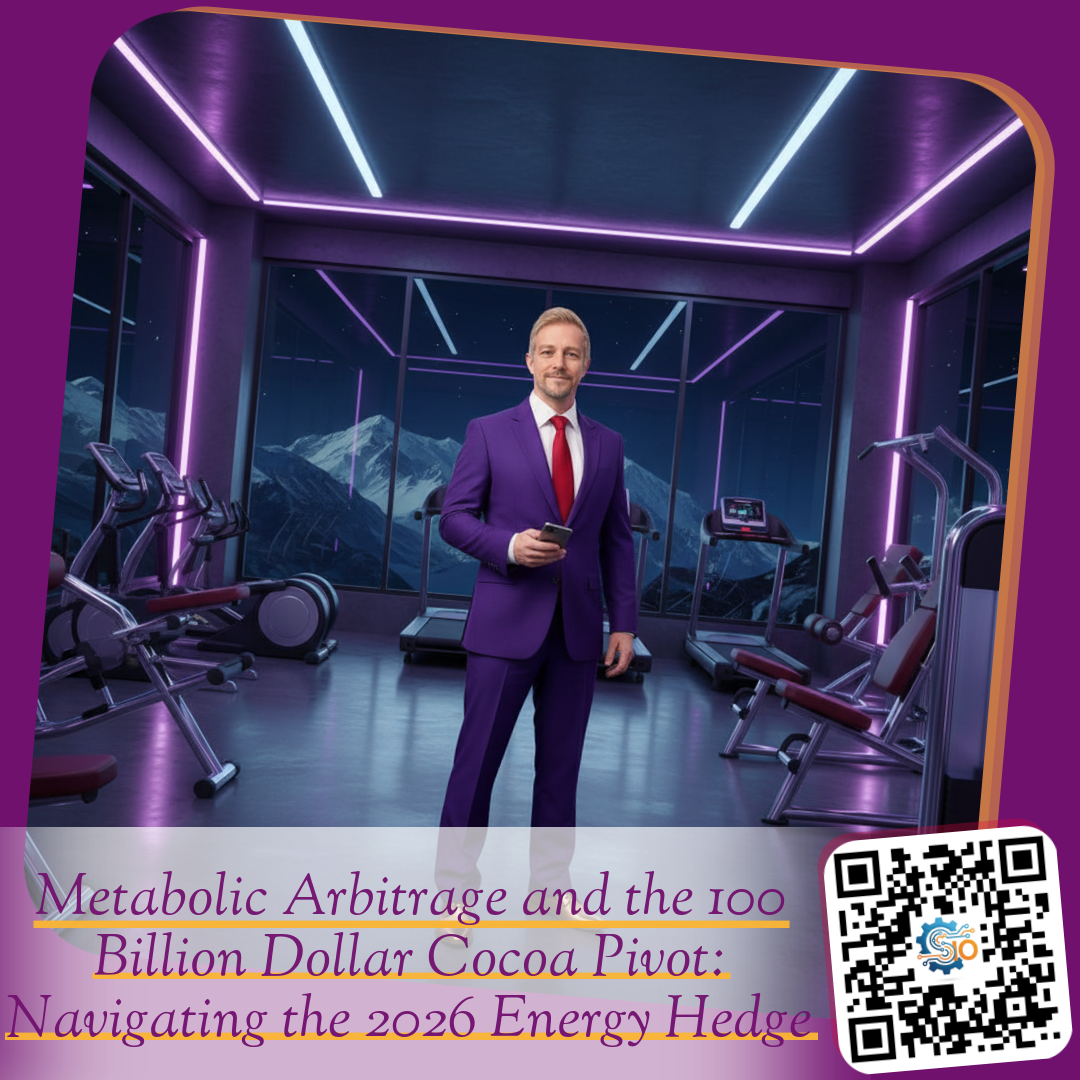
From my perspective here in the luxury of the Alps, I see the romanticism of the “old ways” fading. The new romance is with longevity and performance. Investors are betting that a population on GLP-1 drugs will spend less on groceries and more on high-margin experiences. This is where the “gym-as-nightclub” hospitality trend comes in. If you are not spending your Friday night at a bar drinking expensive, high-calorie cocktails because your medication has dampened the craving, where do you go? You go to the club-vibe gym.
These spaces are becoming the new cathedrals of the mid-20s demographic. They offer the social high of a nightclub – lights, music, community – without the hangover or the caloric debt. It is a perfect hedge against energy-driven inflation. Gyms are easier to climate-control than sprawling nightclubs, and the “product” being sold is the person themselves. It is a high-yield, low-waste economy that perfectly matches the austerity required by the current energy climate.
Energy Crisis as a Catalyst for Change
The Iran war has fundamentally altered the global energy map. As we discussed in The Spring Equinox Pivot: Balancing the March Velocity and the 2026 Energy Crisis, China’s ability to withstand these shocks is a major variable. But for the rest of us, the cost of living is being dictated by the price of a barrel of oil. This makes traditional “luxury” goods that require heavy manufacturing and shipping – like mass-market chocolate – less attractive than digital services and localized health hospitality.
Institutional portfolios are looking for sectors that do not require massive energy inputs to maintain growth. A pharmaceutical lab in India producing weight-loss drugs at scale is far more energy-efficient per dollar of profit than a thousand cocoa farms and their associated global supply chains. The “Metabolic Arbitrage” economy is essentially a bet on human efficiency. If we can make the human body more efficient, we can weather the storm of rising energy costs.
Managing the Empire in a High-Velocity World
In this environment, you cannot afford to be slow. You cannot afford to have your business bogged down by legacy systems that do not talk to each other. Whether you are investing in these new gym-hospitality chains or running a boutique consultancy from a mountain chalet, your infrastructure must be lean. This is exactly why I rely on Systeme.io to keep my digital presence streamlined. When the world is pivoting from cocoa to GLP-1s in a matter of months, you need a platform that handles your marketing, sales, and automation without requiring a team of twenty.
I find that many of my peers are still trying to run their 2026 businesses with 2016 tools. They are losing the “March Velocity” because their tech stack is too heavy. By using Systeme.io, I can launch new funnels and capture the interest of this new “metabolic” crowd in real-time. The ability to automate the mundane allows me to focus on the high-level strategy – like deciding whether to double down on Indian pharmaceutical stocks or look into the next wave of gym-hospitality franchises in Europe.
The Aesthetic of the New Economy
There is a certain beauty in this transition. Even as the cocoa markets slump, the focus on health and vitality creates a new kind of luxury. I see it in the people who visit the high-end clinics near St. Moritz. They are not looking for gold-wrapped pralines anymore; they are looking for the best metabolic specialists and the most exclusive gym communities. My golden shoes have walked across many ballroom floors, but lately, they are more often seen in the lounges of these high-tech wellness centers.
The romantic in me misses the simplicity of a world where a bar of chocolate was the height of desire. But the goal-focused entrepreneur in me sees the massive opportunity in this shift. We are moving toward a world where the most valuable currency is your own biological health and the energy efficiency of your lifestyle. If you can master the arbitrage between what the world used to want and what the world now needs to survive an energy-scarce reality, you will find a level of financial freedom that most only dream of.
A Final Thought on the Spring Equinox
As we pass the Spring Equinox of 2026, the balance of power is shifting. The legacy commodities are losing their grip, and the “Metabolic Arbitrage” is just beginning. We are entering a season of renewal, but it is a renewal that requires shedding the old weight – both literally and figuratively. The energy-driven inflation we face is a fierce teacher, but it is pushing us toward a more sustainable, high-performance way of living.
I will continue to watch these trends from my mountain perch, sipping my coffee (black, no sugar) and adjusting my portfolio. The March Velocity is not something to be feared; it is something to be harnessed. Make sure your systems are ready, your mind is sharp, and your body is prepared for the long game.
How are you adjusting your personal and financial habits to handle the rising costs of traditional luxuries versus the new health-driven economy? Do you believe the “gym-as-nightclub” trend is a temporary fad or the permanent future of social interaction in an energy-conscious world?
I wish you all a focused and profitable Spring. Stay sharp, stay healthy, and I will see you on the social networks where we can dive deeper into these transformations.