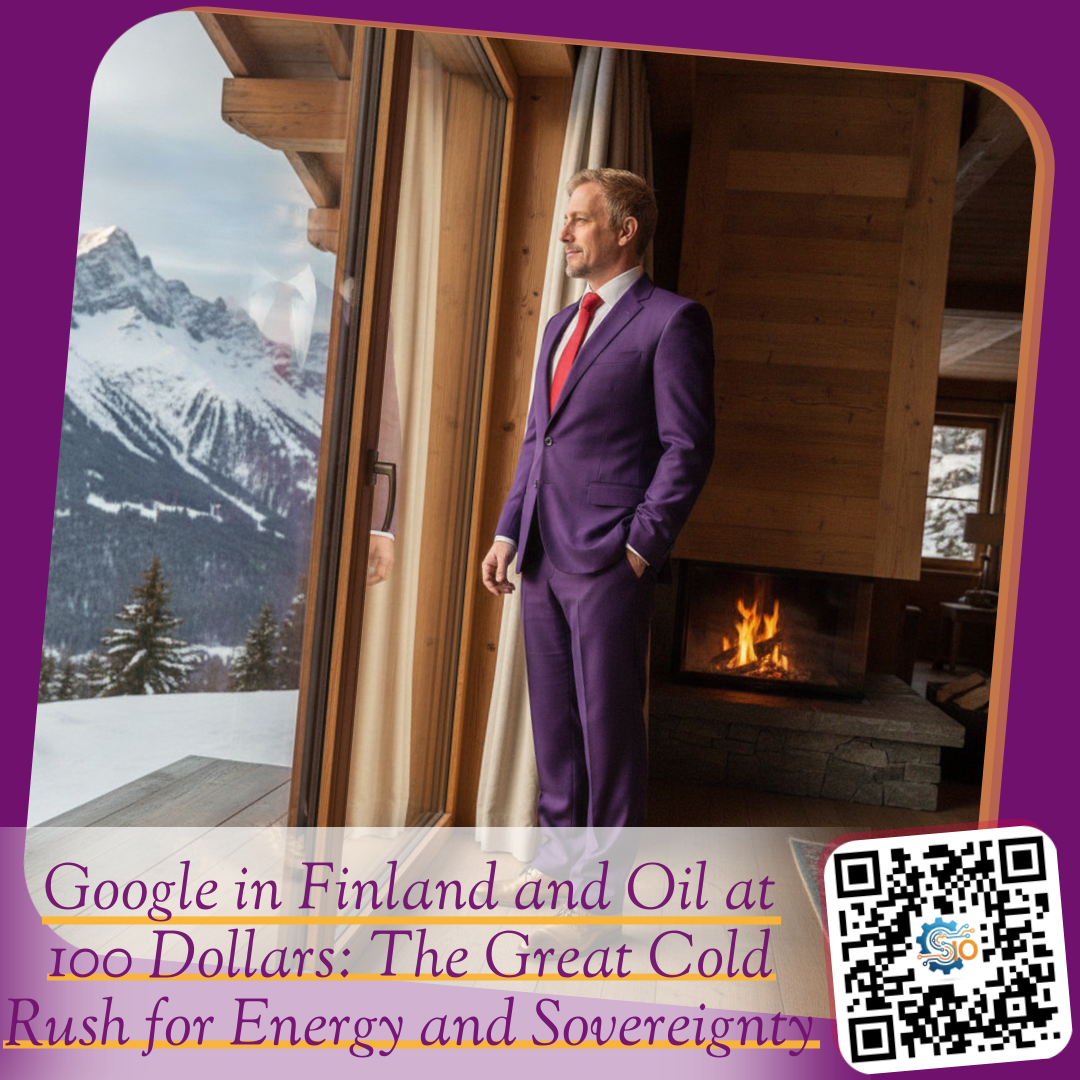
The afternoon sun is casting long, amber rays across the snowfields outside my chalet windows here in the Swiss Alps. It is Wednesday, September 9, 2026, and as I sit here adjusting my red tie, smoothing the lapels of my tailored purple suit, and resting my golden shoes on the timber footstool, the global news tickers are flashing a fascinating story of energy, geography, and computational survival. In the digital age, everyone talks about the cloud as if it floats effortlessly on celestial breezes, weightless and detached from physical reality. Today, reality sent a rather loud reminder.
Oil has officially crossed the 100 dollars per barrel threshold for the first time since July, propelled by escalating naval skirmishes in the Red Sea and fresh strikes across critical maritime corridors. Simultaneously, Google announced that Finland will be the site of its largest single investment in Europe, pouring billions into massive data infrastructure in the chilly Nordic landscape. If you look at these two headlines in isolation, they might seem like unrelated data points from two different desks. When you view them through the lens of sovereign strategy, however, the picture becomes razor-sharp: the global race is no longer just about software algorithms, but about raw power, cooling physics, and sovereign territory.
The Physics of Silicon and the Nordic Refuge
Why Finland? Why now? The tech giants have spent the last three years discovering that artificial intelligence is an insatiable beast with a terrifying appetite for electricity and water. As computational clusters expand, the heat generated by rows of cutting-edge server racks can overwhelm conventional municipal grids. We previously explored this mounting friction in The Tactual Rebirth: How Data Center Exhaustion and Stalling AI Are Returning Us to the Real World, where the sheer physical demands of hyperscale computing began colliding with local energy limits across Central Europe.
Finland offers two distinct advantages that money cannot easily buy elsewhere: freezing Arctic air and exceptionally stable, low-carbon nuclear and wind infrastructure. By placing their most expensive European bet in the Nordic north, Google is effectively building a fortress against the compounding crises of cooling costs and grid instability. Silicon Valley has realized that computation must migrate to wherever ambient physics reduces operational friction. The cold is no longer an inconvenience to endure; it is a premium sovereign asset.
Triple-Digit Oil and the Fragility of Global Flow
While the tech behemoths secure cool sanctuaries in the north, the rest of the industrial machine is absorbing the shock of crude breaking past triple digits. Tensions around maritime bottlenecks have reignited, and supply lines that appeared stable just weeks ago are once again squeezed. As I pointed out in Navigating Maritime Chokepoints and Building Sovereign Resilience, modern global trade remains shockingly vulnerable to narrow geographic funnels that can be disrupted with relatively cheap drone warfare or localized military strikes.
When crude climbs above 100 dollars, the ripple effect runs through every layer of production, logistics, and consumer goods. Shipping rates spike, diesel surcharges multiply, and the everyday entrepreneur suddenly discovers that supply chains are delicate spiderwebs rather than unbreakable steel cables. Higher oil prices inevitably feed into utility costs, transportation bottlenecks, and renewed inflationary pressures. The comfortable assumption that energy would remain cheap and uninterrupted indefinitely has been thoroughly dismantled by the events of this autumn.
Industrial Relocation in an Age of Volatility
We are watching a fundamental reorganization of capital and industrial weight across the continent. In my earlier writing on European Tremors, Industrial Shifts, and Building Personal Sovereignty in Fractured Times, I documented how heavy industry and energy-intensive enterprises were quietly drafting exit plans from regions burdened by high utility tariffs and aging networks. Today, that migration is unfolding before our eyes in real time.
Google heading to Finland is not merely a corporate real estate transaction. It is an acknowledgment that the geographic center of digital gravity is shifting toward regions with sovereign energy independence. When an economic powerhouse shifts its computational core toward the Baltic coast while primary oil lanes face persistent military threat, you begin to see the outline of the new landscape: fragmented, regionalized, and relentlessly focused on baseline resilience.
Architecting Your Personal and Business Sovereignty
What does this mean for those of us who run agile digital enterprises and value our financial freedom above all else? It means that relying on fragile, monolithic, and centralized architectures is a perilous habit. When geopolitical shocks rattle energy markets and cause infrastructure costs to climb, the businesses that thrive are the lean, automated operations that operate with minimal overhead and zero unnecessary bloat.
This is why I have built my entire online ecosystem around simplicity and self-contained automation. Instead of paying for a dizzying array of disconnected software subscriptions that each raise prices as server bills mount, you need unified platforms. For my digital sales funnels, email distribution, and automated workflows, I rely on Systeme.io because it bundles essential marketing machinery into a streamlined, high-efficiency engine. When the world outside becomes volatile, having your business operations centralized inside a reliable, affordable platform like Systeme.io frees your mental bandwidth so you can focus on high-leverage decisions rather than firefighting operational chaos.
Tangible Substance in an Intangible Economy
There is a delicious romantic irony in watching the most advanced technological empire on Earth scurry to the frozen lakes of Finland just to keep its microchips from melting. For years, the digital evangelists promised a frictionless universe where physical constraints, geographical borders, and resource limits would simply dissolve into the ether. Yet here we are in September 2026, watching data infrastructure tethered tightly to cold weather and river water, while oil tankers navigate turbulent waters under naval escort.
The sovereign individual must understand both sides of this equation. You must harness digital leverage to generate capital, location independence, and intellectual freedom, while never losing respect for physical reality. The gold on your wrist, the heating fuel in your storage tanks, the physical deed to your property, and the tangible stability of your home base are the anchors that keep you steady when market winds turn vicious. High energy prices will test weak business models, but they also reward those who built lean systems ahead of the curve.
The Road Ahead for the Prepared Mind
As the shadows stretch across the Alpine peaks this evening, the lesson of today is clear: geography still matters, physical energy remains the master resource, and efficiency is your strongest moat. While Google builds cold-weather vaults and commodity traders recalibrate their models for triple-digit crude, your mission is to keep your own house in order. Trim the excess operational weight, automate your revenue channels, and ground your wealth in assets that do not rely on perfect geopolitical calm.
Are you building your enterprise on brittle, energy-dependent assumptions, or have you designed a resilient system that can weather structural supply shocks? How are you positioning your personal assets as the battle for reliable infrastructure moves to the edges of the map?
I wish you clarity, peace, and unwavering confidence as we navigate this shifting landscape together. Head over to my social channels to share your perspectives and join the ongoing conversation on building lasting personal sovereignty.