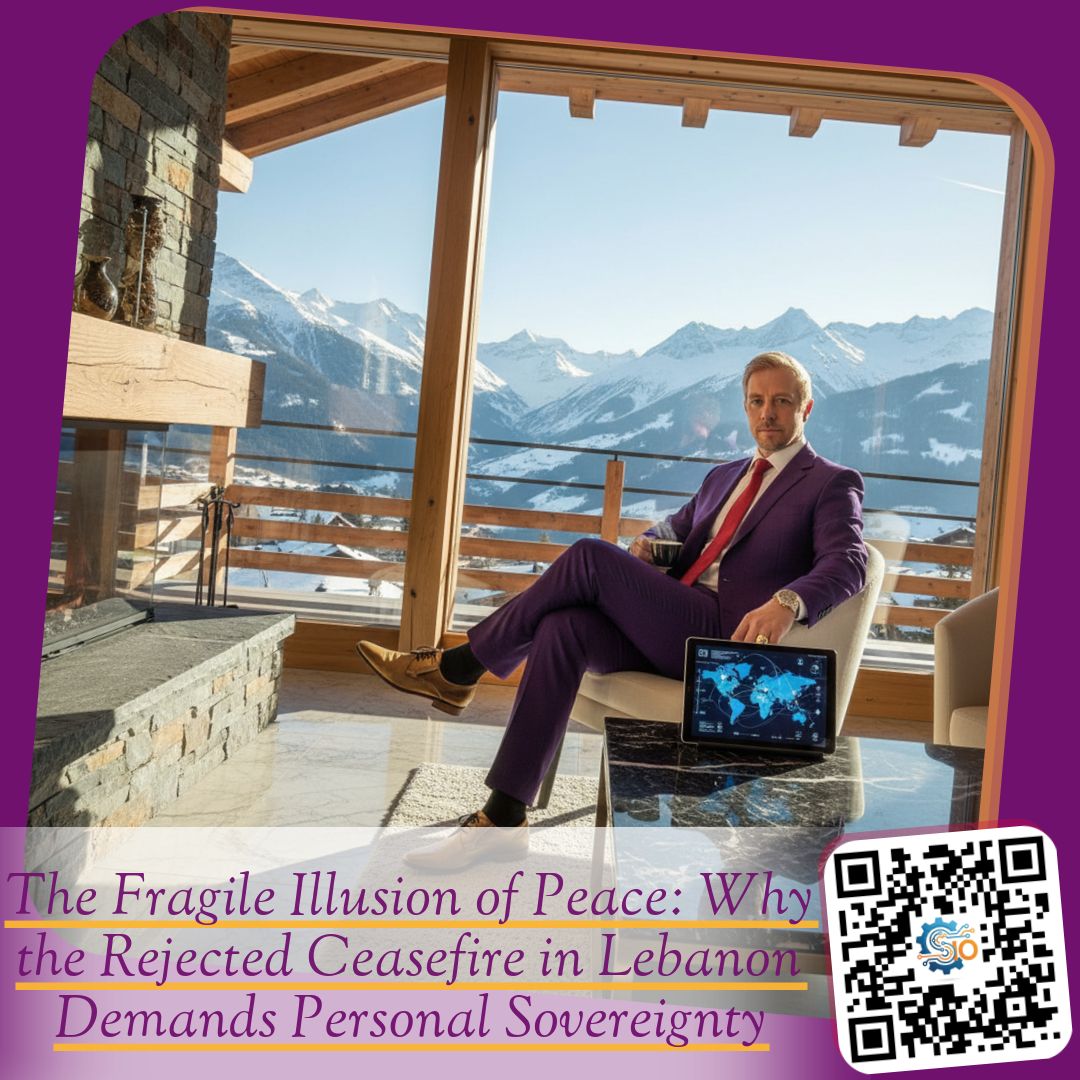
Greetings, my friends, from the crisp, pristine peaks of the Swiss Alps. It is a quiet, chilly morning here on Friday 5 June 2026. The sun is just starting to paint the snowy summits in shades of soft, brilliant gold, matching the polished shoes I currently have laced up. Sitting by the floor-to-ceiling windows of my chalet at 3:42 am, nursing a perfectly brewed espresso, I am watching the world map shift. While my immediate surroundings are peaceful, the digital tickers on my screen tell a very different story.
Just a few hours ago, the international community breathed a collective sigh of relief. A renewed ceasefire agreement, painstakingly negotiated between Israel and Lebanon, seemed poised to bring a temporary halt to the devastating conflict. But that fragile hope was shattered almost instantly. Hezbollah rejected the agreement, refusing to lay down its arms or step back from the brink. Once again, a heavily publicized path to peace turned out to be nothing more than a mirage.
For those of us who observe these cycles, this rejection is not just a regional headline. It is a stark, unavoidable reminder of how fragile our centralized systems really are. We live in an era where top-down agreements, international treaties, and institutional promises can dissolve in a matter of minutes. When you rely on large-scale political stability to keep your life, your business, and your assets secure, you are building your house on shifting sand.
The Broken Promises of a Fragmented World
We have entered a period of history where unpredictability is the only constant. I spoke about this cultural and structural fragmentation recently when reflecting on The Beautiful Chaos of 2026: Why Boeing Failures and Jailbreaks Outshine the Algorithmic Boredom of SpaceX and Digital Circuses. The institutions we used to trust to maintain order are visibly struggling. When a sovereign nation and a neighboring government agree on a truce, yet a non-state actor can simply veto the peace, it proves that traditional power structures are losing their grip.
This breakdown creates a highly volatile environment for everyone. When a major conflict in the Middle East escalates instead of cooling down, the shockwaves travel fast. They ripple through global stock markets, trigger sudden fluctuations in energy prices, and disrupt critical shipping lanes. The world is too interconnected for any of us to pretend that a conflict on the Mediterranean coast does not impact our daily lives.
The failure of this latest ceasefire is a classic example of why we cannot take stability for granted. For months, diplomats drafted papers and drew lines on maps, promising a return to normalcy. Yet, the reality on the ground proved completely immune to their optimism. It is a pattern we see repeated across the globe, where the illusion of order masks a deep, systemic vulnerability.
The Domino Effect of Geopolitical Instability
When peace fails in one corner of the world, the global economy feels the pinch almost immediately. This is not just about abstract financial indices; it is about real-world choke points and supply lines. The escalation of hostilities in Lebanon directly threatens the broader stability of the Middle East, a region that controls some of the most vital trade corridors on earth.
This situation directly mirrors the supply chain vulnerabilities we examined in Trapped in the Chokepoint: What the Strait of Hormuz Blockade Teaches Us About Sovereignty. When regional conflicts intensify, trade routes tighten, shipping insurance premiums skyrocket, and logistics networks freeze. The lesson is simple but profound: if your livelihood is tethered to physical supply chains that pass through geopolitical hotspots, you are constantly exposed to risks you cannot control.
Relying on governments to keep the sea lanes open or to enforce international law is a luxury we can no longer afford. Geopolitical instability is the defining characteristic of our decade. To survive and thrive, we must adapt our personal and professional strategies to match this new reality. We must shift our focus from hoping for global peace to actively building our own personal sovereignty.
Building Your Own Digital Fortress
So, how do we respond to a world of broken treaties and escalating tensions? We do it by decoupling our income, our assets, and our daily lives from fragile physical infrastructure. While we cannot control the decisions of military commanders or rebel groups, we can control how we position ourselves financially. The ultimate goal is to build a life that remains highly profitable and secure, regardless of the chaos broadcast on the nightly news.
The most effective way to achieve this level of resilience is by creating automated, digital assets. When your business exists in the cloud, you are no longer at the mercy of physical borders, shipping delays, or energy crises. You can run a highly lucrative venture from a laptop in a quiet Alpine chalet, serving clients all over the world without ever needing to ship a single physical container.
This is where modern technology becomes our greatest ally. By utilizing an all-in-one platform like Systeme.io, you can easily build, launch, and automate your entire online business. Whether you are selling digital courses, managing a global membership site, or running automated marketing funnels, Systeme.io provides the robust infrastructure you need to secure your financial freedom. It allows you to build a self-sustaining revenue engine that operates around the clock, completely insulated from physical supply chain bottlenecks.
Embracing the Sovereign Mindset in 2026
Achieving true personal sovereignty requires a fundamental shift in mindset. It means moving away from a passive, dependent state and taking full responsibility for your financial destiny. When you see news of a rejected ceasefire, your reaction should not be panic or despair. Instead, it should be a calm, calculated assessment of your personal defenses. You must ask yourself if your current income streams are vulnerable to global shocks.
The gap between those who rely on traditional, fragile systems and those who embrace digital leverage is widening every day. Those who continue to depend on localized jobs, physical retail, and political stability will find themselves constantly buffeted by the winds of geopolitical friction. Meanwhile, those who build automated digital businesses will continue to enjoy peace of mind, high margins, and the freedom to move wherever they feel safest.
From my vantage point here in the Swiss Alps, the path forward is incredibly clear. The world will continue to experience bouts of intense volatility, and peace agreements will continue to be signed and broken. Your job is not to fix the world, but to ensure that you, your family, and your business are protected by a digital moat of your own creation.
As the morning sun fully illuminates the valley below, I want to leave you with a couple of thoughts to ponder. How prepared is your current business model to withstand a prolonged period of global instability? What concrete steps can you take today to migrate your assets into the digital space and claim your sovereign freedom?
Take care of yourselves, keep your focus locked on your long-term goals, and let us continue this vital conversation over on my social networks. Wishing you all a safe, successful, and incredibly profitable week ahead!