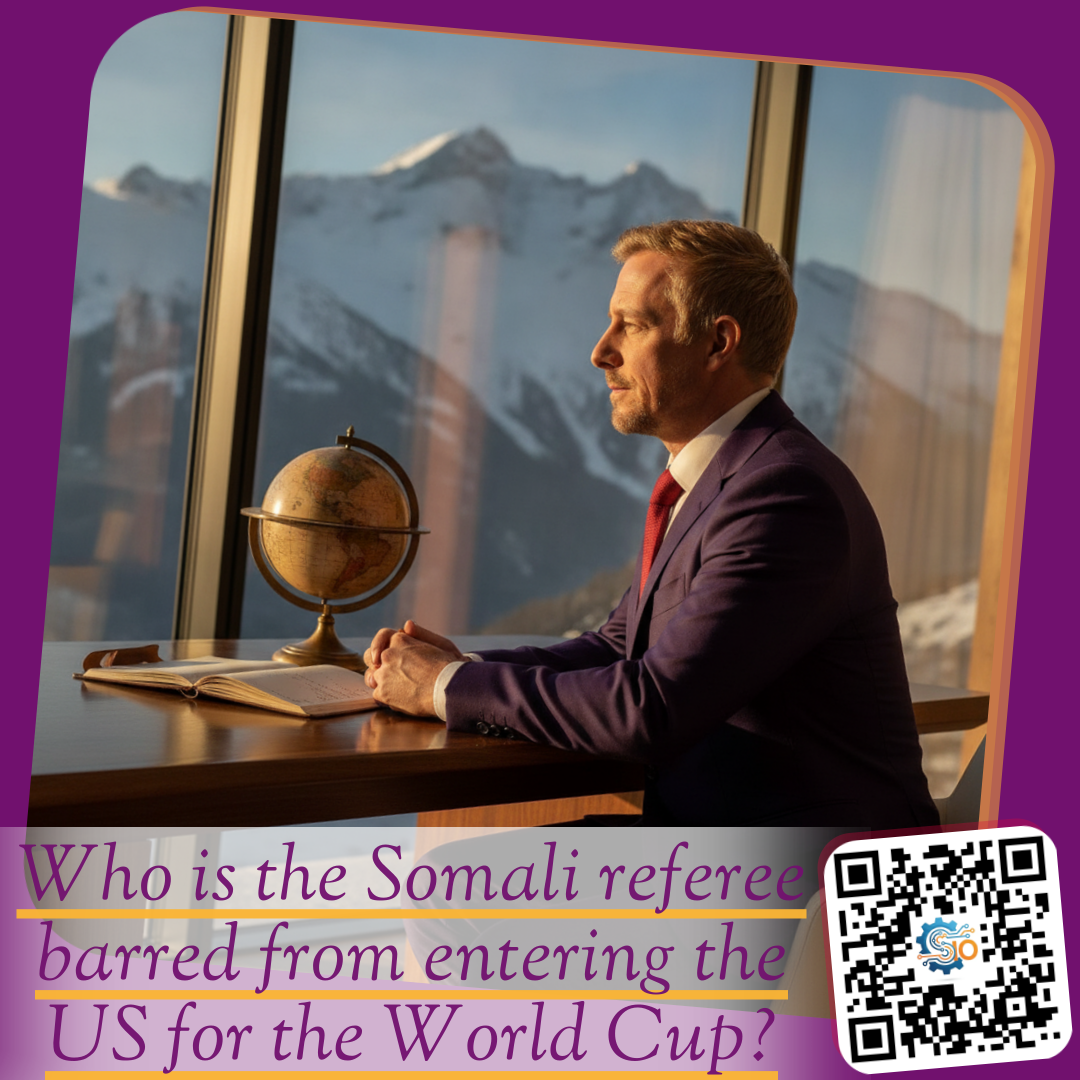
Greetings, my friends, from my cozy corner of the world. Today, as I sit by the crackling fireplace in my Swiss Alps chalet, looking out at the snow-dusted peaks, I cannot help but think about how beautifully vast yet incredibly closed our world can be. I am wearing my favorite purple suit today, paired with a crisp white shirt, a sharp red tie, and my signature golden shoes. Even when I am just writing to you from my desk, I believe in showing up with style and purpose. After all, life is too short to live in grey tones.
As we dive into the summer of 2026, the entire planet has its eyes glued to the TV screens. The World Cup is finally here, promising a grand spectacle of unity, athletic brilliance, and national pride. But behind the sparkling stadium lights and the corporate sponsorships, a quieter, much more unsettling human drama has been unfolding. It is a story that reveals the cold, calculated, and often arbitrary nature of our modern global systems.
I am talking about the sudden and shocking exclusion of Omar Abdulkadir Artan, the Somali referee who was set to make history on the world stage, only to find himself locked out at the gate. Let us take a closer look at who this man is, what happened, and why his story matters to every single one of us striving for true independence.
The Rise of Omar Abdulkadir Artan
To understand the weight of this situation, we first have to understand who Omar Abdulkadir Artan is. He is not just any referee. In the world of African football, Artan is highly respected, known for his sharp decision-making, calm demeanor, and deep understanding of the game. For years, he climbed the ranks, refereeing high-pressure matches across the African continent, proving himself to be a world-class official.
When FIFA announced his selection for the 2026 World Cup, it was a moment of immense pride, not just for Artan, but for all of Somalia. It represented a breakthrough, a sign that talent and hard work could elevate an individual from a war-torn nation to the grandest stage of them all. He was prepared to represent his country with honor and show the world the caliber of officiating that Africa has to offer.
But his dream was cut short before he could even blow his first whistle on American soil. The United States government denied his visa, preventing him from entering the country to fulfill his officiating duties. The decision sent shockwaves through the sporting world, leaving fans and officials asking how such a prestigious appointment could be dismantled by a bureaucratic stroke of a pen.
The Shocking Accusations and the Hero’s Welcome
The plot thickened when US officials publicly claimed that the banned referee had links with terror organizations. It is a heavy, life-altering accusation, one that Artan and his supporters have vehemently denied. In the blink of an eye, a highly respected professional was branded with a devastating label, all without a public trial or a transparent presentation of evidence.
With his World Cup dreams shattered, Artan had no choice but to return home. But instead of returning in shame, he arrived in Mogadishu to a hero’s welcome. Hundreds of supporters, local officials, and football fans gathered to receive him, turning a moment of geopolitical exclusion into a powerful display of national solidarity. For his people, the denial was not a reflection of Artan’s character, but rather a reflection of the unfair, biased systems that govern the Western world.
This situation perfectly mirrors a theme I recently explored in my piece, The Arbitrary Border: What the Barred Somali Referee Artan Teaches Us About Modern Sovereignty. In that article, we looked at how borders in 2026 are no longer just physical lines on a map. They are digital, algorithmic, and highly political barriers that can instantly halt a person’s life work based on unverified data and lack of transparency.
The Broken Machinery of Centralized Bureaucracy
What makes the Artan case so frustrating is the complete lack of accountability in these centralized administrative systems. When a government or a massive international organization makes a mistake, there is rarely a clear path for appeal. You are simply shut out, left to deal with the fallout while the machine keeps grinding forward.
This is a classic example of why relying on centralized systems is a massive vulnerability. I talked about this exact phenomenon in The Illusion of Oversight: Why Manual Effort is a Liability in a Broken Administrative World. We live in an era where bureaucratic systems are so complex, and so reliant on flawed databases, that manual human oversight becomes entirely useless. A flag in a database somewhere, true or false, can instantly dismantle years of hard work, whether you are an international sports official or an entrepreneur trying to move your capital across borders.
When you are at the mercy of these massive, faceless systems, you quickly realize how fragile your freedom actually is. You can play by all the rules, climb to the very top of your profession, and still find yourself locked out because of a decision made behind closed doors by people who do not know your name and do not care about your story.
Building Your Own Digital Sovereignty
So, how do we protect ourselves from the whims of these unpredictable, centralized forces? The answer lies in building our own personal sovereignty. We must create lives and businesses that do not rely on a single gatekeeper, a single country, or a single centralized platform.
I often remind my readers of this in my articles, such as Sovereignty Beyond the Screen: Why the NHL Playoffs and Lottery Jackpots Cannot Buy True Freedom. Real freedom is not about consuming entertainment or hoping to win some systemic lottery. It is about ownership. It is about owning your assets, your audience, and your platform. It is about ensuring that no single entity can pull the plug on your life’s work overnight.
If you run an online business, for example, relying solely on social media platforms or third-party marketplaces is a massive risk. At any moment, an algorithm can flag your account, or a platform can change its terms of service, and you could find yourself metaphorically barred from your own business, just like Artan was barred from the World Cup.
This is why I constantly advocate for building independent, sovereign digital structures. It is exactly why I recommend tools like Systeme.io to anyone looking to secure their financial freedom. With Systeme.io, you can build your own sales funnels, manage your own email lists, and host your own courses without being dependent on mercurial third-party marketplaces. You own the connection to your audience. No middleman can step in and deny you entry to your own marketplace. It is about taking back control and ensuring your hard work remains protected under your own sovereign umbrella.
The Lessons We Must Carry Forward
The story of Omar Abdulkadir Artan is a sobering reminder of the world we inhabit in 2026. It is a world where talent, dedication, and official recognition can still be entirely overridden by geopolitical maneuvering and opaque administrative decisions. While we may not be able to change the visa policies of superpower nations overnight, we can certainly change how we build our own lives.
We can choose to diversify. We can choose to own our platforms. We can choose to build systems that protect our families, our businesses, and our personal freedom from the unpredictable shifts of global politics. Let us use this moment not just to feel empathy for a man who was denied his dream, but to take action in our own lives to ensure we are never left standing outside a locked gate.
Before I sign off to enjoy the mountain sunset, I want to leave you with a couple of thoughts to ponder as you go about your week.
How much of your current livelihood depends on gatekeepers who could easily shut you out tomorrow without warning? What is one practical step you can take today to build greater personal sovereignty in your life and business?
Take care of yourselves, stay focused on your goals, and keep building your path to freedom. If you want to chat about this or share your thoughts on how you are securing your own digital assets, head over to my social media channels. Let us keep the conversation going there!
Wishing you all the very best from the Alps,
Golden Greg