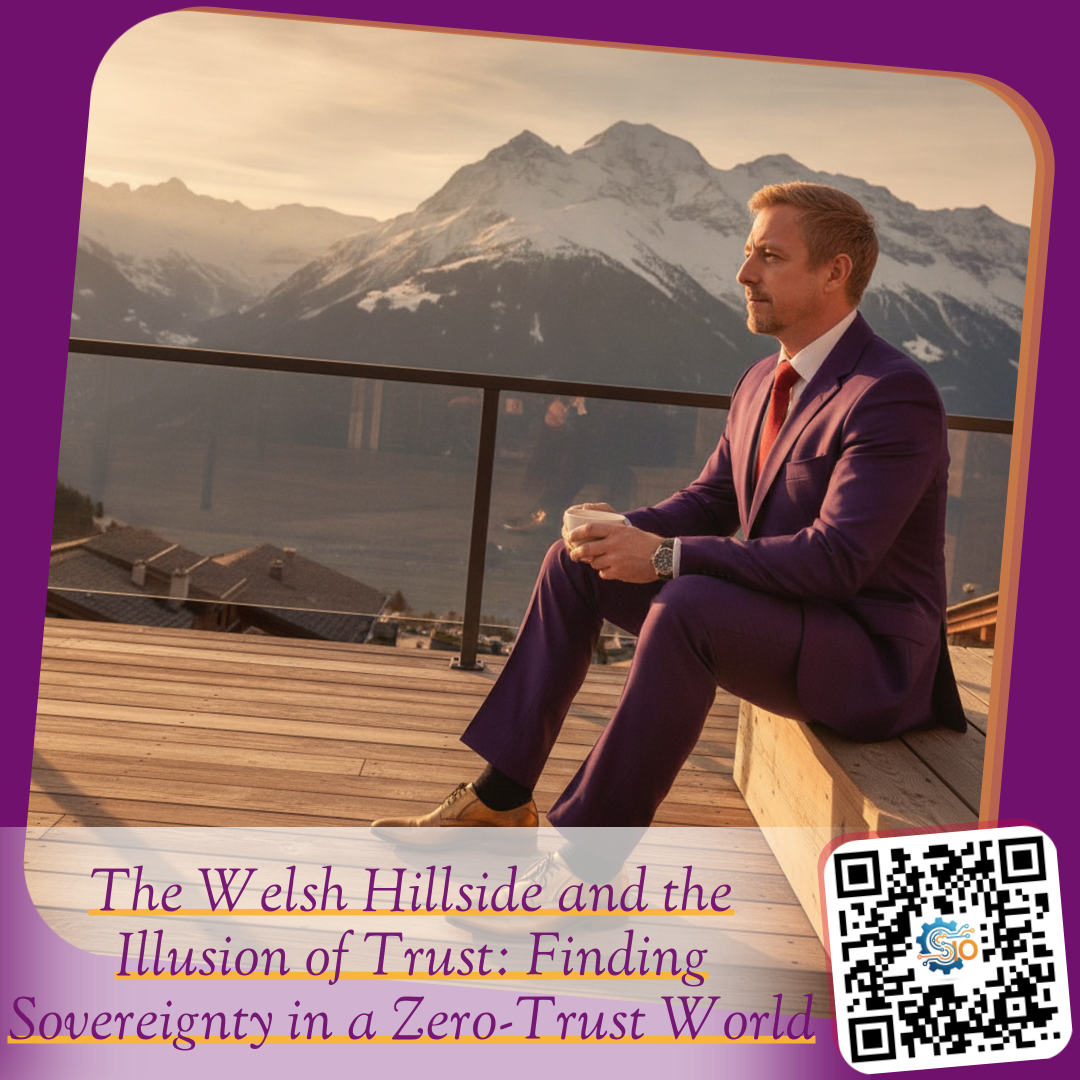
Good morning, my friends! It is exactly 6:42 am on a crisp Saturday here in the Swiss Alps. I am sitting on the terrace of my chalet, watching the first golden rays of sunlight paint the snow-covered peaks in shades of pink and amber. I have a freshly brewed espresso in hand, and yes, even at this hour, I am wearing one of my signature purple suits with a red tie. Why? Because when you live a life of true financial freedom, every single day is an occasion worth dressing up for. But as I look out over this serene Alpine landscape, my mind is buzzing with the strange, hyper-digitized state of the world we find ourselves in today, in June of 2026.
We live in a world of stark, almost dizzying contrasts. On one hand, we see the absolute peak of geopolitical theater and technological advancement. On the other hand, there is a quiet, desperate hunger for something real, something un-hackable, and something profoundly simple. The headlines this week perfectly capture this bizarre duality.
The Theatre of Versailles and the Ghostly Avatars
Just recently, world leaders gathered in the glittering Hall of Mirrors to sign a historic treaty. It was a moment of grand spectacle when Donald Trump signed the US-Iran agreement at the Palace of Versailles. It was designed to look like a monumental step forward for global stability. But as I reflected in my previous article, The Palace of Versailles and the Price of Peace: What the US-Iran Agreement Teaches Us About Personal Sovereignty, these grand political gestures often mask a deeper reality. True peace and personal sovereignty are not things that can be negotiated for you by politicians in gilded rooms. They are built individually, through self-reliance and the deliberate choices you make every single day.
While world leaders play their geopolitical games on the global stage, an even more intimate and unsettling shift is happening in the digital realm. In Eastern Europe, grieving Russian families are now using advanced artificial intelligence to resurrect their loved ones who were killed in Ukraine. These families are feeding old voice notes, text messages, and videos into neural networks to create interactive digital avatars of the deceased. It is a desperate attempt to cheat death, to find comfort in a synthetic voice that sounds just like the person they lost.
But this digital resurrection raises profound questions about what we are actually holding onto. In another recent piece, The Sentinel and the Avatar: Finding Peace Between Digital Resurrections and the Quiet Grave, I explored the delicate boundary between preserving a memory and trapping ourselves in a digital loop. When we replace the quiet dignity of the grave with a constantly updating, algorithmic simulation, we risk losing our grip on the sanctity of life itself. We are trading the painful, beautiful reality of grief for a comfortable, synthetic illusion.
The Erosion of Online Trust
This brings us to a broader, cultural crisis: the absolute death of online trust. Even the most famous voices of our time are beginning to sound the alarm. Recently, the actor Michael Fassbender pointed out how incredibly difficult it has become to know what to trust online. With deepfakes, voice synthesis, and hyper-realistic AI-generated content, we have entered a zero-trust era. If you see a video of me in my golden shoes walking on water, you can no longer believe your eyes. If you hear a voice recording of a world leader declaring war, you cannot trust your ears.
When everything digital can be simulated, duplicated, and manipulated, what becomes of our sense of reality? The digital space, which once promised to connect us and democratize information, has become a hall of mirrors. It is an algorithmic playground where truth is just another variable to be optimized for engagement. In this environment, the search for authentic experiences and verifiable online trust becomes the most urgent quest of our generation.
The Counter-Revolution of the Welsh Valleys
And this is where our story takes a beautifully unexpected turn. While the world is obsessing over AI avatars and geopolitical treaties, a Gen Z Londoner has decided to abandon the concrete jungle and the endless digital noise. Instead of chasing corporate ladders or building a personal brand on social media, this young person has chosen to graze sheep on land in the Welsh valleys. Think about that for a moment.
In an era of zero trust, the ultimate asset is not a digital token, an AI avatar, or a diplomatic treaty. The ultimate asset is the un-hackable reality of a shepherd’s life on a wet, windy Welsh hillside. You cannot hack a sheep. You cannot copy-paste the feeling of cold mud under your boots. You cannot optimize the slow, stubborn rhythm of the seasons with a neural network. The sheep do not care about algorithmic engagement, and the Welsh grass does not require a software update to grow.
This Gen Z shepherd has tapped into a profound truth. When the virtual world becomes entirely fake, the physical world becomes incredibly valuable. The manual, the slow, and the physical are the only things left that are guaranteed to be real. There is a deep, romantic beauty in reclaiming your life from the screen and placing your hands directly into the soil.
Mastering the Digital to Reclaim the Physical
Now, my friends, I am not suggesting that we all pack our bags, sell our possessions, and buy a flock of sheep in Wales. I certainly love my luxury chalet and my custom-tailored suits far too much to spend my days chasing rams through the mud! But there is a vital lesson here about how we structure our lives in 2026. The goal is not to escape technology entirely, but to master it so completely that it no longer controls your time or your mind.
If you are spending twelve hours a day staring at a screen, manually managing clunky business systems, sending emails, and tweaking marketing funnels, you are not free. You are a cog in your own digital machine. To achieve true personal sovereignty, you must build systems that run automatically in the background, freeing you to live in the physical world.
This is exactly why I rely on automation tools to run my high-ticket coaching and publishing empire. By using a platform like Systeme.io, I can automate my entire digital marketing infrastructure. From capturing leads and managing email campaigns to running sales funnels and hosting online courses, Systeme.io does the heavy lifting for me while I sleep, or while I am out enjoying the clean Alpine air. It allows me to maintain a highly profitable digital presence without being chained to a computer screen. By automating the digital noise, you reclaim the hours you need to focus on what is genuinely real: your health, your relationships, and your offline experiences.
Sovereignty is Your Ultimate Asset
Ultimately, the Welsh shepherd and the automated digital entrepreneur are striving for the exact same thing: personal sovereignty. They both want to own their time, control their environment, and live on their own terms, far away from the synthetic illusions of the crowd.
Whether you find your peace on a lonely hillside in Wales or on a sun-drenched balcony in the Alps, the key is to cultivate a life that is grounded in authentic, tangible value. Let the politicians sign their papers at Versailles. Let the corporations build their digital resurrections. For those of us who value true freedom, we will continue to build real, un-hackable lives of purpose, luxury, and peace.
How are you protecting your own sense of reality in this era of zero trust? Have you found a way to step away from the digital noise and connect with the physical world lately?
I wish you all an absolutely beautiful weekend filled with sunshine, laughter, and real-world connection. Let us continue this conversation over on my social networks, where I always love hearing your thoughts and insights!