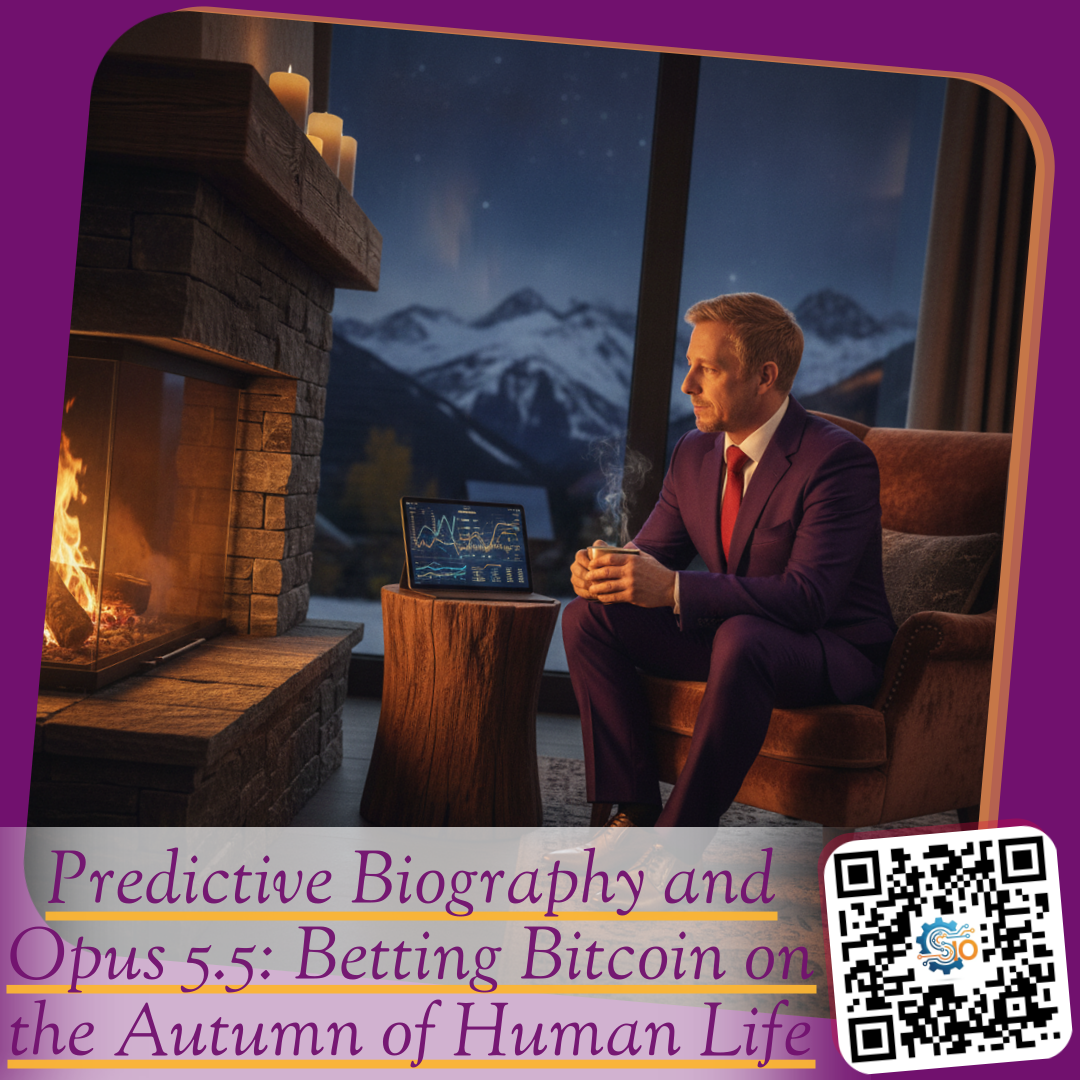
The night air up here in the Swiss Alps carries that sharp September bite, the kind that reminds you that autumn does not negotiate with the calendar. Looking out from my chalet terrace, the jagged silhouettes of the peaks stand entirely indifferent to human ambition. Inside, the cedar logs are crackling in the hearth, throwing a warm glow across my golden shoes and the crisp lapels of my purple suit. It is the perfect evening for a quiet glass of wine, but my screens are humming with something deeply unsettling. The digital world has just crossed an extraordinary threshold, one that blurs the boundary between documentary realism, artificial intelligence, and speculative human voyeurism.
The long-running British documentary franchise that began in 1964 with seven-year-old children has reached its landmark milestone: the production of 70 Up. For over six decades, this cinematic experiment monitored real lives across the British social spectrum, checking in on them every seven years to ask who they had become. Yet in 2026, the quiet empathy of the original series has collided head-on with hyper-advanced machine learning and decentralised finance. A controversial media collective has unveiled what they call Predictive Biography. By feeding thousands of hours of archival footage, medical probability tables, speech patterns, and micro-expressions into the newly deployed Opus 5.5, developers are now running high-fidelity simulations of the subjects remaining decades. Even more surreal, audiences are actively using Bitcoin to wager on the simulated versus real-world aging outcomes within an invasive interface known as Lynx Big Brother.
The Evolution from Empathetic Observation to Predictive Biography
When the original series began, the guiding Jesuit proverb was simple: give me a child until he is seven, and I will show you the man. Director Michael Apted spent a lifetime treating his subjects with patience, observing the unscripted detours of human existence. Some soared beyond their working-class roots, while others struggled against economic gravity, illness, and heartbreak. The magic of the project was its profound respect for the unknown. We watched human beings navigate fate in real time, full of vulnerability and unvarnished dignity.
Predictive Biography strips away that reverence. By leveraging the cognitive horsepower of Opus 5.5, the developers claim they can extrapolate the next ten to twenty years of these elderly participants with uncanny mathematical precision. The neural network generates branching narrative paths detailing potential cognitive decline, joint degeneration, residential changes, and even estimated mortality windows. It is no longer about listening to an elder reflect on love, loss, and grandchildren. Instead, it is about calculating the statistical likelihood of their survival under various economic and physiological stressors.
In my recent piece, The Thermodynamic Absurdity of Modern AI and the Great Clock Debate, I explored how our obsession with mechanical efficiency often blinds us to natural cycles and organic limits. This latest spectacle is the ultimate manifestation of that hubris. We have taken the sacred cadence of aging and transformed it into a deterministic computational puzzle.
The Lynx Big Brother Surveillance Dashboard
The delivery mechanism for this experiment is where the cultural distortion becomes undeniable. Dubbed Lynx Big Brother, the surveillance interface looks less like a streaming documentary and more like a high-tech trading terminal crossed with an intense reality television game show. Viewers do not simply sit back and watch an edited television broadcast once every seven years. They log into a real-time command centre featuring continuous biometric telemetry, passive social tracking feeds, and algorithmic probability trees.
The interface renders the subjects as dynamic digital avatars sitting alongside the predictive projections generated by Opus 5.5. Users can toggle between the synthetic future mapped out by the AI and the actual, fragile reality of a seventy-year-old individual gardening in Yorkshire or walking through an East London market. The software creates a constant split-screen tension between the synthetic prediction and living biological truth. It feels voyeuristic in a way that would make mid-twentieth-century satirists shudder, turning the golden years of real people into an ambient digital spectacle that never turns off.
Bitcoin and the Financialisation of Mortality
Of course, no modern dystopian carnival is complete without a speculative financial layer. Within the Lynx Big Brother platform, users are not just spectating; they are trading. Using lightning-fast micro-transactions settled in Bitcoin, participants place bets on granular life events. Will a subject develop mobility issues before winter? Will an estranged relationship reconcile before the participant reaches seventy-four? Does the Opus 5.5 model correctly predict hospital admissions, dietary shifts, or changes in cognitive agility?
We have turned the natural trajectory of human decline into a sports betting market. It is an unsettling fusion of prediction markets and ruthless voyeurism. The financial incentives warp our basic human instincts. Instead of rooting for an aging human being to find peace, contentment, and comfort in their final chapters, market participants find themselves rooting for an AI model to correctly forecast frailty simply because they have satoshis riding on the outcome.
I reflected on this strange societal impulse to quantify our physical existence in my essay, Reclaiming Biological Autonomy: Meta Stock, Daylight Savings, and Real Earth Power. We continue to surrender our inherent humanity to mechanical benchmarks. When life itself is packaged as an asset class, we risk losing the very empathy that makes civilisation worth preserving in the first place.
Retaining Agency in an Era of Algorithmic Determinism
What bothers me most about this development is the sheer arrogance of the deterministic assumption. Systems like Opus 5.5 are undeniably impressive at pattern recognition, linguistic fluency, and historical data synthesis. Yet a human life is fundamentally non-linear. A conversation over tea, an unexpected surge of artistic passion, a sudden choice to forgive a lifelong rival, or a quiet moment of spiritual resolve can shatter any algorithmic forecast. True life lives in the deviations from the curve, not in the statistical mean.
As I noted in AI Doomsday Narratives and the Reality of Personal Sovereignty, our greatest defence against being reduced to a data point is the deliberate cultivation of our personal sovereignty. We must refuse to let predictive software author our self-worth, our habits, or our future choices. Whether you are twenty-one or seventy-one, your future remains unwritten until you actually live it.
This principle of autonomy is also why I hold such high standards for the digital tools I use in my own business ventures. When I build online marketing ecosystems, membership portals, and automated communication channels, I want absolute control over the platform without invasive corporate surveillance or predatory algorithms. That is why I consistently direct fellow entrepreneurs to Systeme.io. It offers an all-in-one architecture where you manage your email marketing, sales funnels, and digital assets on your own terms. True digital freedom is about building reliable engines that serve your vision, rather than surrendering your hard work to platforms that treat human engagement like an algorithmic casino.
The Sacred Beauty of an Uncalculated Life
As the clock ticks past midnight here in the mountains, I look at the quiet valley below. Down there, people are sleeping, dreaming, and living unrecorded moments that no surveillance interface will ever capture and no neural model will ever anticipate. That is where real beauty resides.
The participants of 70 Up gave the world an incomparable gift by allowing cameras to chronicle their journey from childhood innocence to elder wisdom. To drag their final years into a gamified, Bitcoin-fueled predictive simulation is a profound misunderstanding of what made their stories compelling. Human lives are not datasets waiting to be solved, nor are they betting slips waiting for settlement. They are fragile, glorious, chaotic stories that deserve to unfold in their own time, free from the mechanical gaze of Opus 5.5 and the cold mathematics of the crowd.
As you reflect on the technologies shaping our world tonight, ask yourself this: are you living in a way that could ever be completely predicted by an algorithm? What part of your character, your creativity, or your daily choices remains entirely unquantifiable?
I wish you clarity, deep peace, and the courage to live an uncalculated life. Let us continue this conversation over on my social networks, and until next time, keep your standards high and your mind sovereign.