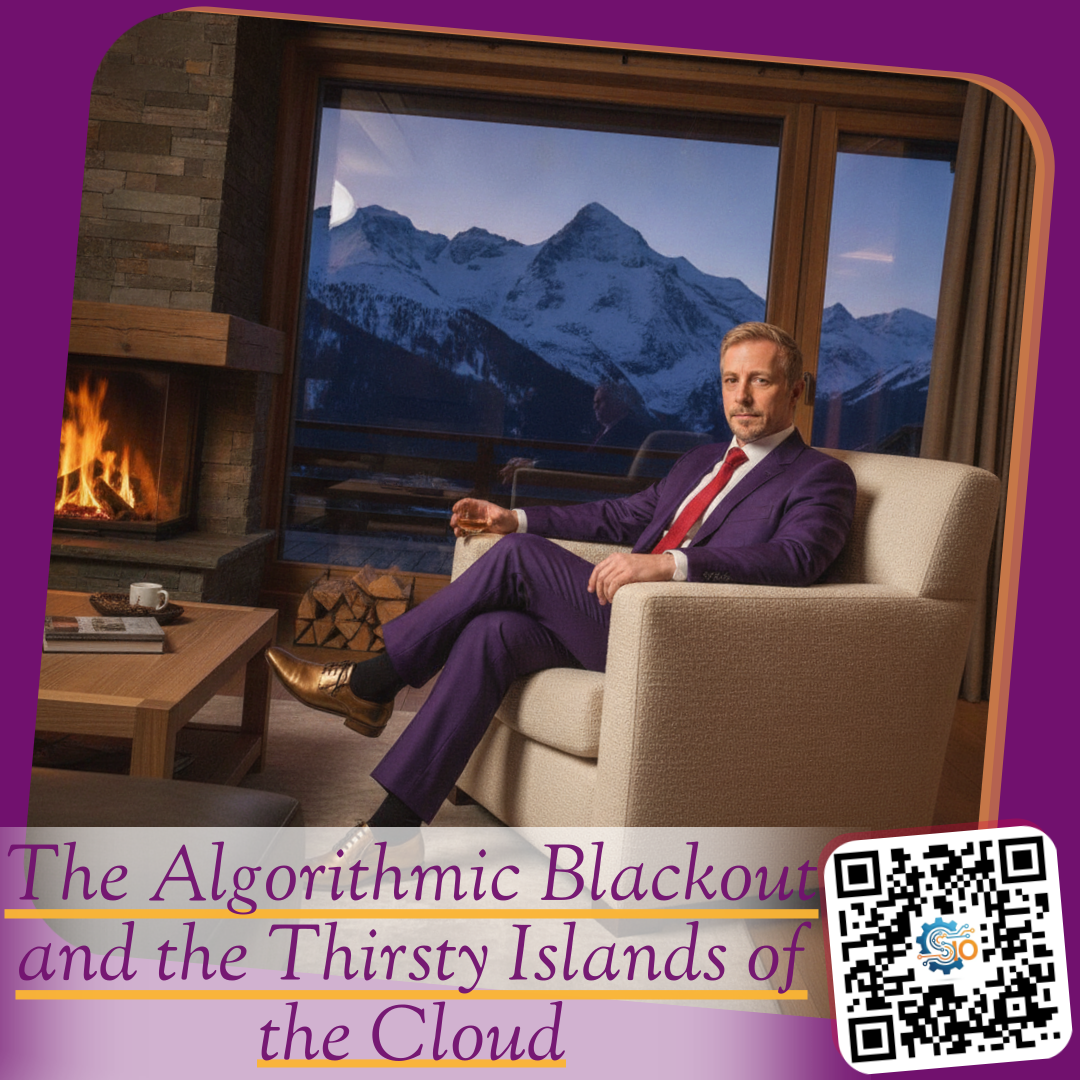
There is a special kind of stillness up here in the Swiss Alps when autumn settles across the peaks. As I look out through the panoramic glass of my chalet this October evening, watching the early snow dust the granite crags, I can hear nothing but the gentle crackle of birch logs in the hearth. A perfectly tailored purple suit, an immaculate red tie, and a splash of golden reflection from my shoes catch the firelight. It is an aesthetic sanctuary, the reward of years spent architecting true location independence and genuine financial freedom.
Yet even in this alpine haven, the global currents reach me. Over the past few months, my conversations with fellow entrepreneurs, digital nomads, and remote executives have taken an unexpected turn. The chic lifestyle symbol of late 2026 is no longer the latest neural headset or an automated personal assistant whispering stock updates into your ear. The ultimate status symbol right now is intentional silence. People are deliberately disconnecting from the feed, shutting down the predictive machines, and learning what it means to think without a machine nudging their next breath.
We saw the beginnings of this cultural revolt when I wrote about Turning Off the Algorithm: The New Frontier of Digital Sovereignty. Back then, it felt like an avant-garde pursuit for the deeply disciplined. Today, it has become state policy and a mainstream craving. Australia took the bold step of testing nationwide consumer rights that let citizens toggle off algorithmic recommendation engines altogether. The promise is intoxicating. Imagine viewing the internet on your own terms, in pure chronological clarity, untouched by dopamine-optimizing retention loops.
The Paradox of the Clean Break
We love the poetry of switching off the stream. We picture the remote worker typing peacefully from a whitewashed veranda in the Canary Islands or a secluded villa in the South Pacific, utterly untethered from artificial stimulation. But reality possesses a sharp sense of irony. While we congratulate ourselves for turning off the algorithmic tap on our screens, the physical engine powering our digital world is quietly draining the literal water tables beneath our feet.
Every time you upload an asset, sync an encrypted workspace, or stream high-definition raw files across continents, you are asking a physical structure somewhere on Earth to execute physical work. Data centers do not float in the ether. They are massive concrete monoliths packed with thousands of superheated silicon units that must be cooled relentlessly around the clock. For years, major technology conglomerates quietly shifted infrastructure toward coastal zones, offshore territories, and picturesque islands, attracted by favorable corporate tax structures and maritime transit corridors.
Now, the bill has arrived. On several fragile islands celebrated as remote work paradises, local residents are stepping out into the streets to defend their municipal water supplies. A single hyperscale facility can consume millions of liters of pristine potable water every single day just to keep evaporative cooling towers functioning at baseline efficiency. When seasonal drought strikes, the village wells run dry while the server halls hum at full capacity, keeping someone else cloud operational.
The Physical Reckoning Behind the Screen
It is easy to forget that the internet has weight. We speak about bytes and bandwidth as if they exist outside thermodynamics, but they are tied to geography, geology, and municipal infrastructure. This friction has escalated from local protests to central geopolitical platforms. Across the Atlantic, the backlash against data centers has emerged as one of the most volatile debates shaping the upcoming United States midterm elections. Suburban neighborhoods and agricultural counties alike are discovering that promised tech campuses bring few permanent jobs while devouring electrical capacity and drinking local reservoirs dry.
We are experiencing the very disruptions I warned about in my piece on Power Grid Shockwaves and Sovereign Digital Architecture in Late 2026. The modern consumer wants clean air, stable power, and an unpolluted life, yet our appetite for decentralized processing continues to soar. When citizens realize that their local utility rates are rising to subsidize cooling systems for foreign server clusters, political patience dissolves overnight.
For the intentional nomad, this creates a profound ethical and practical conflict. You pack your bags, leave the metropolitan grind, and fly halfway across the globe to live simply among local communities, only to realize that the digital lifestyle enabling your escape is starving the local agriculture of its most precious resource. You might have deactivated your personal feed, but the infrastructure you rely on remains fiercely, destructively thirsty.
Rethinking Digital Elegance and Efficiency
True luxury, as I have always maintained, is not about mindless excess. It is about refinement, discernment, and deliberate restraint. If you want to build an enterprise that grants you freedom without turning you into an unwitting predator on local natural resources, you have to audit your technological footprint. Bloated tech stacks, redundant subscriptions, and sprawling server dependencies are the digital equivalent of suburban sprawl.
When running a high-performing international business, simplicity is your ultimate defense. You do not need twenty disconnected platforms burning server cycles on disparate clouds just to run an audience funnel or handle client invoicing. Embracing unified, lightweight systems like Systeme.io allows you to consolidate your marketing, digital products, and customer communications under one clean roof. By minimizing operational friction and stripping away needless background processing, you gain personal clarity while operating a business that is economically resilient and functionally streamlined.
Intentional entrepreneurs must begin asking tougher questions about their operational architecture:
- Does our company culture reward minimalist digital operations, or do we hoard useless data in costly cloud storage?
- Are we hosting our digital assets on infrastructure providers that prioritize closed-loop cooling and genuine renewable energy?
- How do our remote lifestyle choices impact the physical communities that generously host our nomad travels?
- Have we decoupled our revenue generation from hyperactive engagement algorithms that demand constant server thrashing?
The Path to Authentic Sovereignty
Disconnection is not merely a toggle in your phone settings. It is a philosophy of living. Turning off the algorithm is a commendable first step toward reclaiming your focus, but true digital sovereignty demands that we respect the material conditions that sustain us. A lifestyle that drains an island dry so an outsider can trade stocks from a beachside lounge is not sustainable freedom; it is merely an illusion funded by ecological overdraft.
As the dusk deepens over the Alps and the snow turns violet under the twilight sky, I am reminded that the best things in life require no cooling towers. Deep conversation, creative work that touches real human hearts, financial mastery that serves your family, and an unhurried walk in cold mountain air cannot be quantified by an optimization metric. We can build wealthy, extraordinarily successful lives without allowing our tools to devour the landscapes we love.
The coming years will force a maturity test upon the global remote work class. We will have to prove that our pursuit of personal autonomy does not come at the expense of municipal survival in the havens we inhabit. The algorithm can be muted with a single click; restoring an aquifer takes generations.
Can we truly claim to live an intentional life if our digital peace depends on depleting the physical sanctuaries that welcome us? How will you adapt your own online footprint when the hidden environmental costs of the cloud become impossible to ignore?
I wish you clarity, prosperity, and the wisdom to tread lightly wherever your ambitions lead you. Connect with me over on my social networks to share your reflections on this shift, and let us continue building real freedom with open eyes.