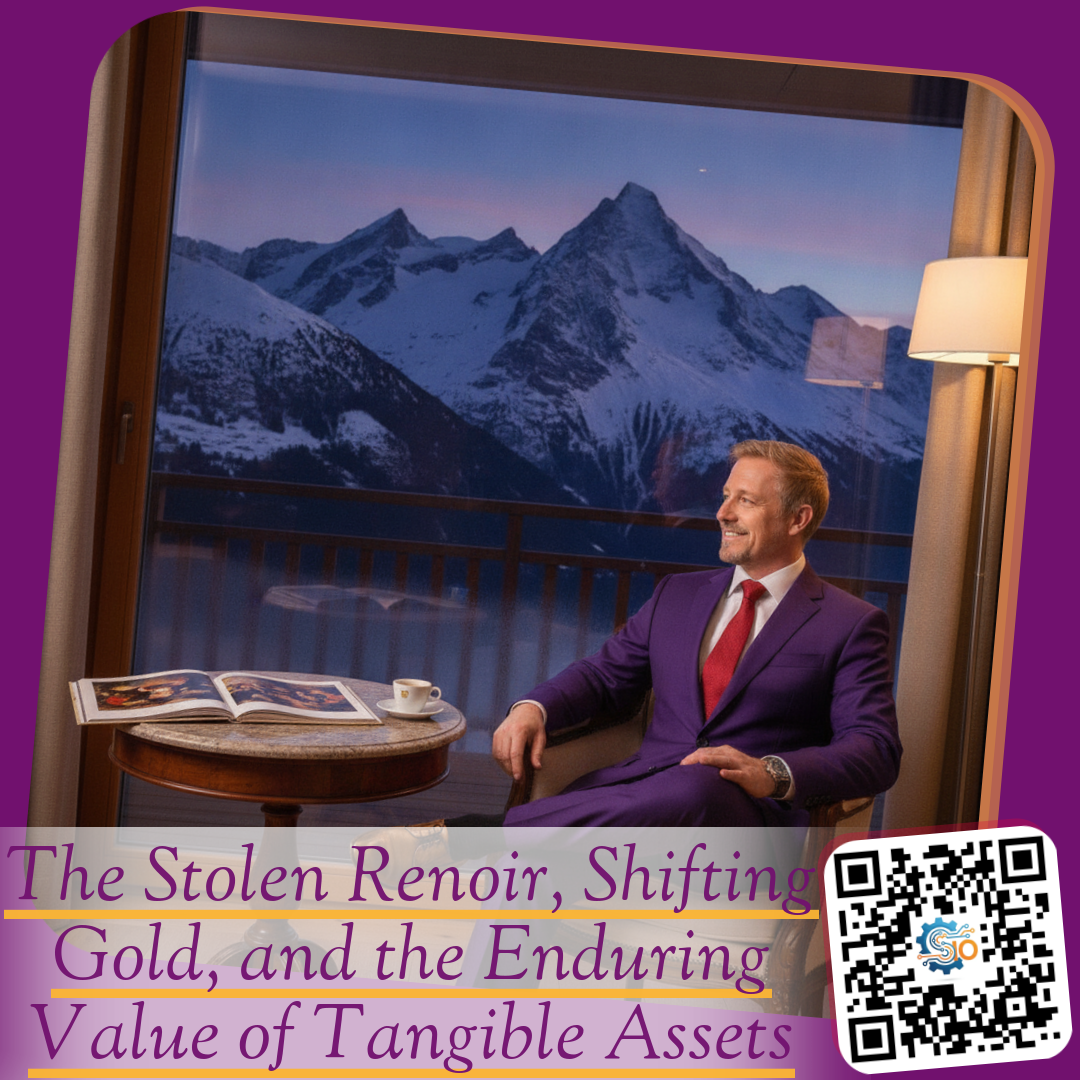
The evening air here in the Swiss Alps carries that crisp September chill, the kind that urges you to pour a neat vintage, pull on your favourite tailored wool jacket, and watch the dusk settle over the jagged peaks. Looking down from my terrace, the chalet feels like an impregnable fortress of peace. Yet, my phone buzzed earlier with news that immediately shattered the quiet elegance of the day. A crew of thieves in France walked out of a museum with millions of dollars in original Pierre-Auguste Renoir masterworks in broad daylight.
There is something deeply revealing about a major museum heist in the late 2020s. We live in an era dominated by cloud storage, synthetic intelligence, biometric checkpoints, and digital tracking. Yet, when thieves want something truly invaluable, they still bring a pry bar and target oil on canvas. They want the real thing, untouched by servers or algorithmic decay.
The Illusion of Vaults and the Fragility of Modern Security
The brazen theft of Renoir paintings in France reminds us that physical institutions are far more fragile than their stately stone facades suggest. For decades, the public has assumed that high-culture institutions and municipal treasuries possess impenetrable safeguards. The reality, as this latest French heist proves, is that human systems remain vulnerable to simple audacity.
While art curators scramble to explain how nineteenth-century Impressionist genius slipped past alarms, a parallel drama unfolds quietly in the financial capitals. Several European governments have begun quietly repatriating their physical bullion from North American vaults. Just as museum glass can be cracked, the sovereign trust that once held international reserves across oceans is fraying at the seams.
In my recent piece, European Tremors, Industrial Shifts, and Building Personal Sovereignty in Fractured Times, I wrote about how institutional trust fractures when global systems hit friction. Today, whether we look at diplomatic squabbles over North Atlantic territory, escalating tariff battles across North America, or central banks reclaiming their gold reserves, the lesson is identical. Tangible assets matter far more than theoretical guarantees on a ledger.
Algorithmic Exhaustion Meets the Physical World
Consider the strange contrast of this week. While European art detectives sift through museum dust for lost strokes of Impressionist paint, lawmakers in Australia are debating legislation allowing citizens to switch off algorithmic feeds entirely. People are exhausted by the relentless churn of pixels, curated outrage, and synthetic noise.
We are watching a broad cultural pivot toward what actually lasts. As I explored in The Tactual Rebirth: How Data Center Exhaustion and Stalling AI Are Returning Us to the Real World, society is rediscovering the irreplaceable value of physical reality. A masterpiece created by Renoir cannot be rendered obsolete by an update, nor can its emotional texture be duplicated by a prompt.
Masterpieces hold their allure because they capture the raw spark of human vulnerability and brilliance. That is precisely why collectors pay fortunes for cultural heritage, and why audacious criminals risk decades in prison to steal it. You cannot hack a painting from across an ocean; you must physically enter the room and carry the weight in your hands.
Tariffs, Sovereignty, and the Return of Friction
While the cultural world reckons with museum break-ins, the broader economy is confronting friction of a different kind. Escalating tariffs between traditional trade partners are reminding businesses that borders still exist. Supply chains that felt entirely frictionless for twenty-five years are suddenly clogged with political levies, bureaucratic filings, and nationalist posturing.
This economic climate reinforces a vital principle: true freedom requires operational sovereignty. You cannot rely on a single jurisdiction, a single currency, or a single fragile supply route to protect your family and your wealth. True independence requires assets you control directly, balanced against streamlined, automated systems that run smoothly no matter how chaotic the news cycle becomes.
Whether it is managing investments, safeguarding physical property, or operating international commercial ventures, simplicity is your ultimate shield. When your physical world requires careful curation, your business operations must be completely lightweight and resilient.
Building Your Own Engine of Independence
Many of my readers often ask me how I maintain this lifestyle, enjoying quiet Swiss evenings in a purple suit and golden shoes without being tied to a conventional desk. The secret is simple: automate your cash-flowing assets so you have the mental bandwidth to focus on real wealth. If you spend all your time putting out administrative fires, you will never possess the clarity needed to protect your future.
To achieve this, your digital infrastructure must be completely consolidated. Instead of stitching together seven different software subscriptions that break whenever an API shifts, use an all-in-one platform like Systeme.io to host your digital marketing, email newsletters, and customer relationships under a single roof. When your digital freedom is built on unified rails, you spend fewer hours managing tech headaches and more time building real, diversified resilience.
A dependable digital architecture creates the cash flow necessary to accumulate genuine, tangible assets. When your baseline income runs reliably on autopilot, you can acquire physical land, build reserves of bullion, or collect authentic art with absolute peace of mind.
Why Authenticity Will Always Command a Premium
The audacity of the French museum heist speaks to an enduring truth about humanity. No matter how sophisticated digital simulations become, humanity will always hunger for the authentic artifact. We will always revere the physical brushstroke, the handwritten manuscript, the original press, and the tactile reality of things built with intention.
Look at the world around you right now. Millions of people are glued to glowing screens, watching videos that might be deepfakes, scrolling through social networks they yearn to escape, and stressing over volatile numbers on banking apps. Meanwhile, the genuine treasures of our world, whether gold sitting in a Zurich safe or an Impressionist canvas hidden away in a collector gallery, command unmatched reverence.
Do not let the speed of the digital world trick you into neglecting the physical foundations of life. Build relationships with people you can look in the eye. Anchor your capital in things that do not evaporate when the power grid flickers. Master the digital tools to earn your living, but live your actual life firmly in the tangible world.
Protecting What Cannot Be Replaced
As the French authorities scour international borders in search of the missing Renoirs, we are reminded that true value is defined by scarcity and soul. You can reproduce a digital file ten billion times at zero cost, but you cannot recreate the touch of a nineteenth-century master once the canvas is destroyed.
Take stock of your own life and assets this week. Where have you grown complacent? Are you relying too heavily on digital promises, volatile institutions, or fragile conveniences? Or have you begun establishing the boundaries, sovereign reserves, and physical safeguards that protect your autonomy during times of global turbulence?
What steps are you taking this autumn to ensure that your wealth and peace of mind rest on solid, physical ground? When you look at your own portfolio and lifestyle, how much of it truly belongs to you, and how much exists purely at the pleasure of a distant server?
I wish you clarity, strength, and sovereign abundance as we move into the cooler months ahead. Connect with me on my social media channels to share your perspectives on true wealth and modern security. Until next time, stay sharp, stay grounded, and keep living life on your own terms.