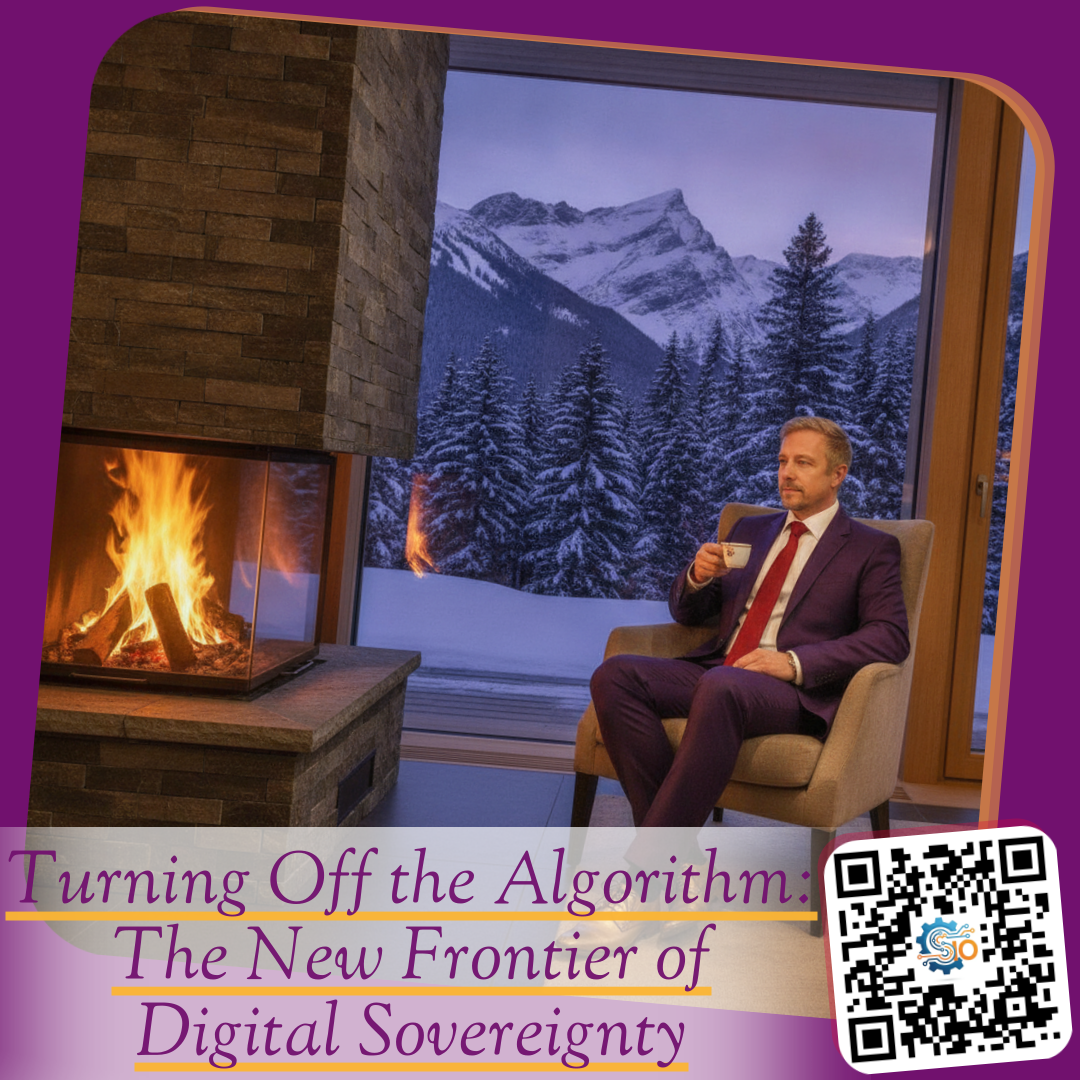
There is a crisp autumn chill settling over the Swiss Alps this Thursday afternoon. Looking out through the panoramic glass of my chalet, the snowline is creeping down the granite peaks, framing the valley in stark white and golden larches. I am sitting by the hearth in my favorite bespoke purple suit, crimson tie neatly knotted, my golden shoes catching the warm flicker of birch logs. A cup of freshly brewed Ethiopian roast rests beside my notebook, and my feed is humming with news that feels like a quiet revolution. Down in Canberra, lawmakers are preparing to test what once seemed impossible: giving citizens the legal right to completely switch off the recommendation engine.
For over a decade, digital life has been dictated by unseen mathematics. Every scroll, pause, purchase, and nervous twitch has been harvested to keep eyes glued to glass. Now, the conversation is shifting from passive consumption to aggressive reclaim. What happens when an entire nation tests whether humans can survive without an artificial pulse feeding them their desires? It touches the very essence of how we build our independence, manage our businesses, and safeguard our mental clarity in late 2026.
The Illusion of Free Choice in an Engineered Feed
We often tell ourselves that we control what we consume online. You open an application to check market trends or read an analysis on international trade, and thirty minutes later you are watching warehouse teardowns or vintage car restorations. The platform did not give you what you wanted; it gave you what would hold your attention hostage. This engineered habit is precisely why discussions around algorithmic autonomy are reaching a fever pitch.
Australia is now stepping into uncharted waters by exploring mandates that let users shut off predictive filtering entirely. Imagine viewing a platform in pure, chronological order, untainted by engagement optimization. To the tech conglomerates, this is treated as an existential threat. Their business models rely on the friction between what you intend to do and what their neural nets convince you to watch. When you remove the predictive funnel, the entire machine begins to look surprisingly fragile.
We saw hints of this vulnerability earlier this year. When physical vulnerabilities breached the highest corporate sanctums, as I explored in The OpenAI Bugging Scandal and Why Physical Espionage Rules the Artificial Intelligence Frontier, we learned that beneath the pristine aura of silicon intellect lies messy, desperate human maneuvering. If giant tech entities can have their secrets pinched with analog bugs in boardrooms, their algorithmic dominance over our minds is hardly invincible.
Data Infrastructure and the Backlash on the Ground
The push to dismantle continuous algorithmic feeding is not happening in a vacuum. It is colliding directly with physical limits. Every single recommendation system running round the clock requires monstrous computational power. Across the United States, public outrage over massive data centers consuming municipal water reserves and overloading local utilities has become a defining issue heading into the midterm elections. Citizens are asking why their electricity rates are doubling just so server farms can calculate personalized advertisements in real time.
We have reached a bizarre historical moment where local communities are fighting corporate infrastructure over power access. In my recent piece, Power Grid Shockwaves and Sovereign Digital Architecture in Late 2026, I pointed out that physical energy limits would inevitably dictate digital convenience. You cannot run endless high-compute recommendation models when the surrounding power grid is groaning under seasonal strain. When people realize that data infrastructure compromises their everyday quality of life, the appetite for turning off unnecessary algorithmic bloat changes from a philosophical debate into local policy.
When you strip away the background noise, the question becomes practical: why should our digital existence depend on brittle mega-clusters that exhaust real-world resources just to tell us what to think?
Reclaiming Control Through Independent Systems
True luxury has never been about flaunting excess; it is about self-determination. Over the years, living here in my alpine retreat, I have built my life around absolute autonomy. When I want peace, I close my laptop and walk into the pines. When I conduct business, I insist on clean, transparent tools where I own my pipeline rather than leasing audience attention from a volatile newsfeed.
If you run a modern online enterprise, relying on social algorithms to deliver your customers is a perilous trap. The algorithm can alter its temperament overnight, slashing your distribution to force paid promotion. This is why sovereign creators and agile entrepreneurs are abandoning algorithmic dependency altogether. They rely on direct communication, owned distribution lists, and streamlined automation.
That is precisely why I point serious builders toward platforms like Systeme.io. When you build your sales funnels, email broadcasts, and community infrastructure through Systeme.io, you do not have to beg a Silicon Valley neural net to show your work to your own subscribers. You send an update, and it lands directly in their inbox. It is clean, predictable, and independent. It mirrors the exact shift occurring in national policy: cutting out the parasitic middleman that sits between creator and community.
The Discipline of Algorithmic Freedom
Turning off the recommendation engine sounds wonderful in theory, but it requires a level of personal discipline that many people have forgotten. Algorithmic feeds provide artificial comfort. They eliminate the burden of searching for information by constantly spoon-feeding sensations. When you turn that mechanism off, you are confronted with quiet screens and uncurated feeds. You must actively decide what to read, what to learn, and where to invest your focus.
This pursuit of algorithmic freedom is fundamentally about mastering your own cognitive bandwidth. If you rely on external systems to tell you what matters today, you are essentially outsourcing your worldview. The moment you switch off the predictive feed, your time opens up. You stop reacting to fabricated outrage and start focusing on high-value goals, whether that means perfecting your investment portfolio, deepening your relationships, or creating meaningful work that stands the test of time.
Consider the daily habits that build genuine personal sovereignty:
- Curating your own information sources instead of allowing an algorithmic aggregator to decide top stories.
- Building direct connections with mentors, peers, and clients through private, owned digital channels.
- Setting defined parameters around device usage to prevent compulsive scrolling during productive daylight hours.
- Investing in durable skills that do not depend on the whims of third-party software updates.
The Road to Real Autonomy
The legislative battles taking place in Australia and the utility skirmishes surrounding server facilities across North America are early warning signs. We are reaching peak algorithmic saturation. The public is beginning to understand that convenience often conceals a high tax on personal agency.
Achieving true digital sovereignty is not about abandoning modern technology; it is about using tools that work for your objectives rather than serving their internal growth targets. Whether society forces the tech giants to offer a manual off switch or you take the initiative to prune your digital habits yourself, the ultimate goal remains unchanged: keeping your mind clear, your schedule uncluttered, and your independence intact.
As the dusk settles against the snowdrifts outside, I find myself deeply optimistic. The world is waking up to the fact that peace of mind is the ultimate asset. When you take the reins of your digital environment, financial freedom and creative clarity follow naturally.
Could you navigate your daily routine if your personalized feeds went dark tomorrow? How much of your current outlook is shaped by deliberate choice rather than algorithmic steering?
I wish you clarity, health, and unshakable independence as we step into this new season. Let us keep the conversation going across my social channels, where we focus on real strategies for building a self-directed life.